Category Archives: Blog

First look at new PENN Spinfisher V “Long Cast” reel

I am reading the draft of new Skinner’s book on LIRR on Friday. I am shaking my head and going, ” this Is plain awesome”. It really is, you guys are going to love it, I have no doubt. I got half way though the book but when I got home one thing stuck in my head.

John is obviously brilliant. You’ve seen his videos, you’ve seen what he fishes with, you’ve heard his seminars. I believe he is a scientist by trade, with kid in Princeton University. There are no lack of brains in that family. And going by what John lays out In his book, money is not the only reason either In his choice of reels he fishes with. He says In the book his philosophy is “Buy what you need” and ” that he need is a very dependable reel”


Shall we take a look at his   choices ?


Open Beach Lamiglas 1231m PENN 706Z

Open Beach Lamiglas gsb1201l VAN STAAL 200

Back Bay and Sound PENN Regiment 7 foot PENN SSV4500

Inlet rod old Lamiglas GSB 1321M PENN SSV8500 or 706Z

Sound Lamiglas MB1083M PENN 5500SS


Some people just need a dependable reel. There is time and place for everything. The guys In wetsuits that swim to rocks and even those that wade to chest high rocks need a waterproof reel. Becouse eventually you’ll end up on your ass and be forced to quickly get up and reel your line before it gets tangled up in the rocks…..with your reel under water.


Some guys plainly dont need a waterproof reels. I would lie to you if I told you I was not suprised by how many PENN models John uses but then again, I kind of get it why. I fished with VS 150 on my 7′ St Croix Legend for years. And before that on St Croix Premier. It was always good to me. That particular model was probably the most dependeable reel I ever owned (In fairness it was never submersed). But when I thought about buying a new reel for inshore fluking that my son can use too, I thought about that. The fact that it was never wet or submerged in ten or more years I used It. Do I really need to spend that much on another 150? So I did not. I bought a $100 PENN that I been perfectly happy for the application I used It.


To each its own, we should all be glad we have so many choices

Here is a first look  video at new PENN Spinfisher V “Long Cast” model

New rotor

New Drag

New long spool

anti reverse

manual bail

only comes in 7500 model, no bail less option

hoping to do a real life test versus regular PENN Spinfisher v 7500 as soon as I get a chance.


Video


[youtube]https://www.youtube.com/watch?v=bilDNCG0C2Q[/youtube]


John Skinner’s new book, The Fisherman Show, White Water Outfitters event and more

Today’s Blog will be a mix of news. New issue is coming after the weekend
. I just wanted to mention continually perplexing reports about low attendances at these ASMFC hearing. Why I have no idea. No excuses later if we don’t try now. Anyway, we got news from Skinner, The Fisherman and White Water. For all of you that are coming to show on Thursday, we will have brand new shirts. Unfortunately after waiting for days to get a visual i can show you I had to move along with this blog post. Update forthcoming when I get it. Check out this spiffy cover design by SJ own Tommy Corrigan
Btw…i guess with my son at college now we need anofficial video “intern”…seriously, I do need some help with basically holding camera and monitoring the sound so if someone is willing to hook up on weekends in jones beach area or during the week drop me a line at zhromin@verizon.net….
Zeno
By John Skinner
Around 18 months ago I decided to write another book. The overwhelmingly positive response to how I did Fishing the Bucktail was a strong motivator. I decided I would use that same style to do a comprehensive brain dump on how I approach striper fishing from the shore. I also set out to acquire and organize video to support the aspects of the book that could be enhanced with video. For example, I’ll write about pencil popper fishing in great detail, but the ability for me to show you what I’m writing about and for you to watch how fish react to the technique is beyond what anyone can accomplish with the written word alone. The book’s title is “Striper Pursuit”. Its companion website,http://www.StriperPursuit.com/, will presents the videos organized by chapters. QR codes are embedded in the book so that people with smartphones and tablets can scan barcodes to watch videos pertaining to the portions of the book they’re reading. My targeted release date is November 1.http://www.StriperPursuit.com/ is pretty far along, so feel free to check it out. Most of the video is in place, and the rest will be there upon the book’s release. The nice thing about having the website to support the book is that I’ll be able to add to it as I acquire additional relevant video. I’m pretty excited about the whole idea of enhancing the book’s 200+ pages with well-organized and targeted video. Here’s the first public look at the cover! Nice work by Tommy Corrigan!
frf
.
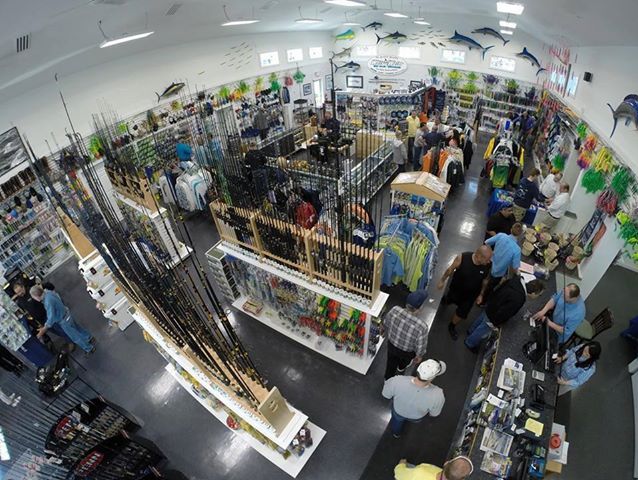
White Water Outfitters…Hampton Bay NY
THE 2014 FALL KICKOFF – September 13, 2014Well folks…We are ready to have a little more fun like we did for our grand opening. Now we have the 2014 FALL KICKOFF on September 13, 2014. Come on down to White Water Outfitters for another day of fun, food, prizes/giveaways, reel and rod demos and store specials. Store opens at 5am!– 15% – 20% OFF Almost Everything In The Store
– 20% OFF Pre-Built Custom Rods
– Purchase A Van Staal and Receive 2 FREE Super Strike Lures and FREE Braid

– Purchase anything in the store and automatically receive a raffle ticket for prizes
– Win A Custom Lamiglas Surf Rod
– Win Big Game Giveaways
– Win Surfcasting Giveaways
– Win Boat Fishing Giveaways

Again….Going to be a great day to bring in the 2014 Fall Season for all fisherman. Come for food, store specials, and an overall great time!

TRGG
and of course The Fisherman Show
FishingSurfShow1411


Win a pair of new KVD by Mustad Braid Cutting Pliers, Lanyard and Shears

Of all the crazy thing we do while surfcasting, from hopping rocks to fighting waves, dead batteries in most unlikely places, one thing that frustrates me the most is re-tying stuff on the rock in the middle of the night. Yeah, I could definitely use pair of glasses but most of the time is the line that wraps itself around all the places it shouldn’t. The funny part is, if I get the tying process right the first time, I am done in less then a minute. But if I inexplicable lose my line or have a hard time cutting lose braid…trouble usually follows.

I’ve meet a LOT of guys who carried nail clippers to cut mono, back in the days..lol

Some probably still do although I am having a hard time cutting braid not under tension with pliers, never mind nail clippers. But I think I found an answer to my little incompetence issue and it came as courtesy of this year ICAST 2014 in Orlando Florida.

I received these Braid Cutting shears from Mustad and I thought you’d get a kick out of them and many of you might prefer to see the product on video instead of static picture.

And since we always share the spoils with our readers, we will also give one of you a chance to win these Mustad KVD Braid Cutting Shears. After you watch the video you’ll understand why I think this is a neat product for surfcasters..and only around ten bucks or so

[youtube width=”525″ height=”400″]http://youtu.be/0R9GmBoOVPM[/youtube]

The Midnight Rambler : The Changing Face of Montauk

The Midnight Rambler

John Papciak

mtk fly

The Changing Face of Montauk

(Part of an occasional series)

Well, it’s finally here. Tumbleweed Tuesday – The Labor Day Weekend is a wrap, and now places like Montauk have a chance of return back to some state of normalcy. The New Normal.

If you have plans to fish the “Surfcasting Capital of the World” this fall, I wish you all the best. But if you visited this past summer, well, you probably saw enough to have you wondering what the future holds for this once laid back fishing village.

First the bad news.

There is a silent war being waged for the identity of Montauk – or at least that portion of Montauk between Memorial Day and Labor Day.

Lots of people pulling at this from different directions, but I see this as a three-way race between the hipsters, the partyers and the families.

Hipsters, in case you did not know, are those young urban dwellers in desperate search being cool, and being in and around all things cool. A fickle bunch, but somehow Montauk is on the list. Long story, but when you have a string of writers who come to Montauk, and after two hours are inspired enough to spin out a story for fellow Manhattan and Brooklyn peeps (Williamsburg to be more specific) well, I guess if enough people read it, they believe it.

Partyers are those 20 to 30 somethings from the island and city, who come to sweat it out in crowded bars, and elbow each other for the opportunity to pay $13 for a drink. Think Jersey Shore, with a college degree and a bit more disposable income.

Montauk has always been that “Quant little drinking village with a fishing problem,” but now some bars come complete with goon-like bouncers with mic and earphones, thumping techno music served up by celebrity DJs, and velvet ropes with guest lists.

Really? Montauk! Who da thunk?

05MONTAUK1-articleLarge

Here again, with a new generation of writers lining up to break the news about the new hotspot Montauk, we shouldn’t be surprised by the results.

http://www.cnbc.com/id/101533357

And of course, let’s not forget to mention those families, in search of reasonably priced accommodations, close to both the beach and restaurants.

It’s hard to tell which group is winning at this stage of the game, but the families clearly are not.

I think of summer crowds and the associated tensions as sort of like a Tropical Storm. Pretty nasty when it hits, but it blows over quickly once the eye passes. But depending on when you pay a visit, you may see some of the aftereffects.

I may have mentioned this before, but if you stayed at the East Deck in Ditch Plains in the past, you’ll have to find someplace else. I’m is still wondering how a run-down motel in a flood zone sold for $15 million. The new owners – known only as ED40, and who have gone to great lengths to hide their identity – has proposed a beach club, complete with underground parking.

The impact on fishing in the offseason is hard to predict, other than more attention to parking violations, and perhaps some specific problems with beach access in front of the former motel.

But don’t worry your little heads on this one, and please don’t join into a chorus of “It ain’t like it used to be.”

You can actually join up with a couple of local organizations with expertise and energy to take up the fight.

http://www.preservemontauk.org 

http://www.preservemontauk.org/wp-content/uploads/2014/08/ED40-Position-Paper.pdf

http://www.ditchplainsassociation.com

I strongly suggest that you do, actually.

38256252

Elsewhere in Montauk, a number of familiar stores in the downtown area will probably close by the end of the year. Johnny’s Tackle and the Willow Giftshop are two prime examples of long-time businesses packing it in. “The people coming to Montauk these days are just not buying the same things that the family people were,” lamented one shop owner.

I get it.

Selling alcohol is higher margin and a very simple business model. And if the weather turns bad over the weekend, business only gets better. Inventory never goes bad. You can change your prices whenever you want, and customers probably will never even ask – probably too drunk to know.

I was riding my bike past the Sloppy Tuna at 6am a few weeks back, and saw the employees hosing down the deck, and then the streets in front of the place. At times like these – a rare moment of absolute clarity – alcohol being converted to urine and vomit, all at a hefty profit.

Now remember, you can’t blame the “partyers,” “citiots,” “hipsters,” and assorted 23-year-old drunks for this transformation.

There is a supply and demand aspect to this equation.

Not every new bar is owned by an outsider, and there are plenty of locals who are quite willing to cash in (or cash out)

Speaking of cashing in, this past summer the focus has been on the rental market. East Hampton (which includes the Hamlet of Montauk) has strict laws concerning short term rentals, and rentals to groups – laws on paper anyway. Homeowners are not permitted to rent their houses by the week, let alone the weekend, and certainly not to groups. But many of them do anyway.

The situation got so bad for one local that she created a Facebook page to document the parties each week.

http://pagesix.com/2014/07/26/airbnb-slobs-are-causing-a-raucous-in-montauk/

“There are a growing number of homeowners who seem quite willing to rent to groups for share houses,” stated a long-time local one real estate professional. “They offer their houses online. They charge high prices to kids on a week to week or even nightly basis, and they charge so much they really don’t care if the house gets wrecked.”

While local enforcement has been slow to respond, at least two homeowners are now facing some hefty fines, and there are now Town Hall discussions about a much more formal homeowner rental registration process.

Here again, the impact for fall fisherman should be muted, but I wouldn’t be surprised if the rental market remains just a bit tighter and pricier in the future.

Speaking of delayed local response, Cyrils Fish House, of all places, is in the cross hairs of local officials. Apparently a backlog of building code violations may have caught up with the owners. Now local officials are working that angle to get the liquor license revoked. The Memory Motel is also under scrutiny.

Hard to say how this will turn out, but if the Town is indeed able to use such violations as a way to turn off the booze, that would mean that most of the “New Montauk” bars are vulnerable. Many of these new bars have a stack of violations.

Despite all the changes, there is some good news here.

None of these hipsters and partyers, zero, nada, zilcho, care about fishing. Zero impact on the beaches, not when most of you will be fishing anyway.

The choices for food are also much better than they were ten years ago.

The dingy motels are also being slowly upgraded (but if you are still looking for a cut-rate dive, there are still a few still standing …I’ll hold off on mentioning any here)

Speaking of conflicts, the Montauk Surf Fishing Classic has been pushed back a week, and will now take place from Friday Sept 26th to Sunday the 28th. This is the same weekend as the Montauk Triathlon festival of races, which will feature hundreds of bikers on West Lake Drive, East Lake Drive, and all along 27 to the lighthouse and back, on Saturday and Sunday morning.

Hmm…slide on campers, negotiating in and out of Camp Hero and the Lighthouse lots, when all those racers are going by Lighthouse at 30 mph…that sounds like a hoot.

The Montauk Seafood Festival is slated for September 13-14, at the Montauk Marine Basin over on West Lake Drive

The 2014 installment of the Fall Festival and Chowder Contest will again take place over Columbus Day weekend.

Depsite the summer crowds, and all the changes, each week from here on out will see numbers steadily thinning.

By Veteran’s Day, most of the seasonal bars and restaurants will have closed, and the concern will shift from being able to get a reservation, to simply finding a good place that is still open.

And by December, Montauk will once again be absolutely desolate.

Until that time, if the white bait shows up… or the sand eels… or the peanuts…or the herring and gannets, I suspect we won’t spend a minute worrying about any of these changes at all.

P1010205-Edit-2

YES, FISH EAT OTHER FISH

Drum roll please for the winners of PENN Fishing giveaway of Three Prevail PRESF1530S10 Surf Rods. Once again I would like to thank folks from PENN Fishing for making this possible. There were ,gasp, 921 entries and we had to choose three randomly.
The winners are
Jack Mcgurin mcjack1@comcast.net
Jeff Plummer plummer.jacts319@gmail.com
Andy K jackslrf@gmail.com
all winners, you MUST contact us at info@surfcastersjournal.com with your shipping address which we will forward to the folks at PENN Fishing
Congrats to all winners

PREVAIL_SURF_spinning11

I just read the latest blog post by Charlie Witek and found it fascinating, educational and entertaining. No author I’ve ever read has the ability to lay out the world in front of you so clearly. I think you guys should visit his blog at http://oneanglersvoyage.blogspot.com/ and subscribe to recive update anytime he posts something.
Here is his latest piece

Sunday, August 31, 2014

By Charles Witek  http://oneanglersvoyage.blogspot.com/ 

YES, FISH EAT OTHER FISH (AND HAVE, SINCE THE ORDOVICIAN)
I was reading through the Draft Addendum IV to Amendment 6 to the Atlantic Striped Bass Interstate Fishery Management Plan when a somewhat strange passage caught my eye.
It came in Section 2.2.3 of the Draft Addendum, which is entitled “Ecosystem Considerations,” and it said

“When fishery management changes are being contemplated, food web relationships should be considered…Striped bass are predators of other Commission managed species, including weakfish and shad and river herring. As the striped bass population grows the demand on prey species also increases. The increased demand on prey species may have impacts on those species undergoing rebuilding plans. The current addendum’s goal of reducing fishing mortality to target levels may impact predation on other ASMFC-managed species.”
I don’t have any problems with the premise that striped bass eat fish—that’s certainly true—but I do have concerns about the overall tone of the section.

Because the best that I can tell, fish have been eating other fish since the Ordovician Period, about 450 million years ago; at least that’s when the first remains of presumably jawed and piscivorous sharks appear in the fossil record.

Bony fish (as opposed to the cartilaginous sharks) started eating other fish about ten million years later, when the long-extinct Acanthodians appeared on the scene in the early Silurian.

In his book Discovering Fossil Fishes, Dr. John G. Maisey of the American Museum of Natural History noted that

“The developmental and anatomical complexity attained by gnathostomes [i.e., jawed animals] has been relatively stable at least since the Silurian. We can view the rise of the gnathostomes as a second punctuated event, followed by more than 400 million years of relative stasis.
“It is quite remarkable that the basic diversity of jawed craniates became fixed so early in their evolution. Sharks, ray-finned fishes and lobe-finned fishes all appeared about 400 million years ago and have survived to the present day. Conservatism of design is striking…”
In other words, fish have been eating each other on a regular basis for a very long time. Yet somehow, they survived—in fact, thrived and radiated out into an ever-changing plethora of species—for hundreds of millions of years, even though for all but a tiniest fraction of that time, predators existed at far higher levels than they did today—at 100% of their spawning potential, the level of an unfished stock.

There were no people around to control predators’ “demand on prey species.” And there was no worry about predators affecting stock rebuilding plans, because with no people around to overfish forage fish stocks, there were no such plans and no need for rebuilding in the first place.

So let’s put the blame where the blame belongs, and stop blaming striped bass—or any other species—for fisheries problems.

If we’re talking about a lack of weakfish, let’s talk about ASMFC’s refusal to accept scientific advice to put a moratorium in place to assist in their rebuilding.

After being told by ASMFC’s Weakfish Technical Committee that
“The main discussion was a moratorium is more than likely the best way to go at this time…”
and public comment supported such moratorium by a two-to-one margin, ASMFC’s Weakfish Management Board heard comments such as those of Tom Fote, the current governor’s appointee from New Jersey, who said

“…I’m looking at a situation that doesn’t basically shut down a complete fishery and basically allow the person, if he catches a weakfish of a lifetime or something like that or the kid on a beach actually catches a weakfish on that rare occasion, they can go home with one weakfish.
“…at least they’ll have, you know, one fish to take home…
“You know, we also talk about we’re supposed to build a sustainable fishery for a sustainable industry. If you start closing down both those industries, it takes a long time for that industry to recover…”
and seemed to consider such argument reasonable. The Management Board rejected both the Technical Committee’s comments and their endorsement by the public, and left both the recreational and commercial fisheries open, although at much reduced harvest levels.

They didn’t seem to consider the possibility that, if you keep taking fish out of an already badly depleted weakfish stock, the stock will take at least as long to recover as the fishing industry—which, in the end, at least has many viable alternatives to harvesting weakfish.

Weakfish, on the other hand, have no alternatives if they get caught and die.

And now, a lot of the same folks who sat on that management board apparently want to blame the striped bass for the weakfish’s problems…

In the case of American shad, Amendment 1 to the Interstate Fishery Management Plan for Shad & River Herring noted, as early as 1998, that

“Historically, American shad (Alosa sapidissima), hickory shad (Alosa mediocris), alewife (Alosa pseudoharengus) and blueback herring (Alosa aestivalis) (collectively termed alosines) were extremely important resource species and supported very large commercial fisheries along the east coast of both the United States and Canada…large declines in commercial landings were perceived as an indication that management action would be required to restore alosine stocks to their former levels of abundance…”
However, as is so often true with ASMFC plans, managers did not take decisive steps to reduce harvest, and declines continued. ASMFC allowed many of the river-specific stocks to decline so badly that, in the case of shad in New York’s Hudson River, the latest stock assessment found that

“Over the last 20 years, the Hudson River stock of American shad has shown consistent signs of excessive mortality on mature fish…high adult mortality was caused by fishing and that this excessive fishing has now affected recruitment.
“…Results of this fishing pressure has left the stock in a historically depressed condition with high uncertainty regarding its recovery. Few year-classes currently remain at high enough abundance to rebuild the spawning stock.”
Twelve years passed, while “high adult mortality caused by fishing” continued to drive down the stocks in the Hudson and elsewhere, before ASMFC finally decided to adopt more effective measures in 2010. Unfortunately, by then things had gotten so bad that, at least in the Hudson, there is now “high uncertainty” regarding the stock’s recovery.

Yet ASMFC has the temerity to suggest that striped bass are to blame…

In the case of the alewife and blueback herring—the “river herring” referred to in the shad and river herring management plan—ASMFC decided merely to monitor the stocks—effectively, to just watch them decline—in 1989.

It took them two full decades, after runs in many rivers had all but disappeared and the Natural Resources Defense Council had filed an ultimately unsuccessful petition to have river herring listed under the Endangered Species Act, to finally require states to take regulatory action in Amendment 2 to the Interstate Management Plan for Shad and River Herring.

But, once again, ASMFC wants to blame striped bass for river herring problems…

Yes, striped bass eat some weakfish, American shad and river herring. They’re opportunistic feeders, which means that they eat most of the species that ASMFC manages—and a lot that it doesn’t—at some point in their travels along the coast. But they’ve been doing that for millenia before Henry Hudson sailed up his eponymous river, where so many big stripers still breed.

Yet there is no indication that the bass posed mortal threat to weakfish, herring or shad before the first waves of colonists came over from Europe and began to “save” such fish from striped bass (and to save other prey from every other predator that, with a bit of work, could be converted into food, funds or fertilizer).

Somehow, before Europeans arrived to catch the ravenous striped bass (and everything else) with their nets, hooks and lines, “unprotected” weakfish, shad and herring still managed to thrive. Before the otter trawl, haul seines, purse seines, pound nets, gill nets, fykes and baited lines, striped bass, river herring, weakfish and shad managed to live in a sort of harmony that allowed them all to exist at or near 100% of their spawning potential (although the oldest residents of the east coast, who walked there all the way here from Siberia, did kill a few).

And it wasn’t because the striped bass had been vegetarians before the white man arrived on this coast.

We are far more effective predators than the striped bass could ever hope to be, and we compete with them for every forage species. Yet when forage declines, it’s always the striper’s fault.

It’s not a pattern unique to striped bass. On every coast, we hear the same arguments.

In Chesapeake Bay, and down in North Carolina, the talk is all about blue crabs being killed by red drum, with one fish wholesaler saying

“If they don’t do something about this fish population and restoration of this habitat, I don’t see where crabs are going to have a chance.”
Down in the Gulf of Mexico, you hear folks talking about red snapper eating everything else on the reef.

Perhaps the best story came from a former executive director of the Coastal Conservation Association’s Florida chapter, who related a story about being at a shrimp bycatch hearing in Panama City when a woman wandered up to the microphone and said

“You all are trying to stop bycatch, but I’ll tell you that bycatch is good. Back in the old days, we didn’t worry about bycatch. We caught jacks and mackerel and things, and there was plenty of mullet and bait and everything was fine. But now you’re stopping the bycatch, and the fish are eating everything so that there’s no bait around, and the pelicans are starving.
“And that’s why you’ll see the pelicans flying around and eating stray cats on the street in Panama City!”
It’s no less credible than the other tales, which are all aimed at convincing regulators to let fishermen do nature a “favor” and help drive down populations of striped bass, red drum or whatever the species in question might be, so that they can be as depleted as their forage and “balance” can be restored.

Of course, cutting back harvest and restoring the forage base is never a viable option…

That sort of thinking is probably understandable when it comes from folks looking out for their wallets.

But when it comes from folks who are supposed to be looking out for our fisheries, it’s just not excusable.


and a little craziness at the end..possibly the craziest surf fishing video ever

[youtube]https://www.youtube.com/watch?v=ob5l1lkV-pg[/youtube]

ASMFC Hearings….Time For Action

Editors note #1

Bill Muller and Ross Squire drafted the attached guide to walk people through the public comment process.The guide presents the options that will most enhance the long-term quality of striped bass fishing, conserve the population, and is the most practical to implement.most conservation friendly. I hope none of our readers will be the one that will piss and moan online about striped bass stocks and yet when its time for action they will find a reason not to go to the hearings. If you can attend, please do.

Zeno


The Atlantic States Marine Fisheries Commission (ASMFC)

Addendum IV to Reduce Striped Bass Mortality

Under Amendment 6 of Striped Bass Management Plan


Purpose of this Guide: The addendum is a long document with occasional overlapping sections, it is sometimes confusing with regard to one and three-year approaches, and provides tables and graphs that are not always self-explanatory for the average angler, since the document has been prepared for commissioners, scientists, and managers.

The following is an attempt to distill 36 pages for quick consumption. It provides a guideline that anglers can use when writing letters or making comments at the upcoming hearing on Tuesday, September 16, 2014. The guide should assist in selecting addendum options and management scenario options that best benefit striped bass and the typical striped bass angler.

Written Response Period: Anytime until 5:00 PM September 30, 2014. Respond via e-mail or in writing. Your letter should be short so that managers will read it, and reflect your addendum and management option preferences.


The Long Island Public Comment Hearing: If you plan to attend to support proper striped bass management and you desire to speak, please see an ASMFC representative and fill out a speaker’s card. Please keep your comments short (ASMFC typically provides only a few minutes to speak per person) and your comments should reflect your preferred options and management sub-options. You may hand in a written version of your comments, too.

Date: Tuesday, September 16, 2014

Time: 7:00-9:00 pm

Location: Stony Brook University Wang Center – Room 201

A schedule of other Public Comment hearings 

Massachusetts

September 2, 2014
10:00 am – 12:00 pm
Nantucket Community Room
4 Fairgrounds Road
Nantucket, Massachusetts
jared.silva@state.ma.us

Massachusetts

September 2, 2014
6:00 pm – 8:00 pm
Massachusetts Maritime Academy
Admiral’s Hall
101 Academy Drive
Buzzards Bay, Massachusetts
jared.silva@state.ma.us

Massachusetts

September 3, 2014
6:00 pm – 8:00 pm
MA DMF
Annisquam River Station
30 Emerson Avenue
Gloucester, Massachusetts
jared.silva@state.ma.us

New Jersey

September 4, 2014
7:00 pm – 9:00 pm
Galloway Twp. Branch of the Atlantic Co. Library
306 East Jimmie Leeds Road
Galloway, New Jersey
russ.allen@dep.nj.gov

Massachusetts

September 4, 2014
6:00 pm – 8:00 pm
Viking Club
410 Quincy Avenue (Route 53)
Braintree, Massachusetts
jared.silva@state.ma.us

Maine
September 4, 2014
6:00 pm – 9:00 pm
Orion Performing Arts Center, MSAD#75
Mt. Ararat Middle School
66 Republic Avenue
Topsham, Maine
Terry.Stockwell@maine.gov

New Jersey

September 9, 2014
7:00 pm – 9:00 pm
Ridgefield Park Elks Lodge #1506
Corner of Spruce Avenue and Cedar Street
Ridgefield Park, New Jersey
russ.allen@dep.nj.gov

Delaware

September 11, 2014
6:00 pm – 8:00 pm
DNREC Auditorium
89 Kings Highway
Dover, Delaware
john.clark@state.de.us

New Jersey

September 15, 2014
7:00 pm – 9:00 pm
Toms River Town Hall
L. M. Hirshblond Room
33 Washington Street
Toms River, New Jersey
russ.allen@dep.nj.gov

New York

September 16, 2014
7:00 pm – 9:00 pm
Stony Brook University Wang Center
Room 201
Stony Brook, New York
Carol Hoffman at 631.444.0476
carol.hoffman@dec.ny.gov

Rhode Island

September 17, 2014
6:00 pm – 8:00 pm
University of Rhode Island
Corless Auditorium
South Ferry Road
Narragansett, Rhode Island
nicole.lengyel@dem.ri.gov

Pennsylvania

September 17, 2014
6:00 pm – 8:00 pm
Silver Lake Nature Center
1206 Bath Road
Bristol, Pennsylvania
elevis@pa.gov

Virginia

September 22, 2014
6:00 pm – 8:00 pm
Virginia Marine Resources Commission
2600 Washington Avenue, 4th Floor
Newport News, Virginia
rob.oreilly@mrc.virginia.gov


Potomac River Fisheries

September 23, 2014
6:00 pm – 8:00 pm
Potomac River Fisheries Commission
222 Taylor Street
Colonial Beach, VA
martingary.prfc@verizon.net

New York

September 23, 2014
7:00 pm – 9:00 pm
NYSDEC Region 3 Office
21 South Putt Corners Road
New Paltz, New York
Kathy.Hattala@dec.ny.gov

Maryland

September 25, 2014
6:00 pm – 9:00 pm
Cadby Theater,
Kent Humanities Building
Chesapeake College
1000 College Circle
Wye Mills, MD
mluisi@dnr.state.md.us

North Carolina

September 29, 2014
6:00 pm – 8:00 pm
Dare County Government Complex
954 Marshall C. Collins Drive
Manteo, North Carolina
michelle.duval@ncdenr.gov

Importance: Striped bass stocks are down again due to poor spawning and overharvesting. We need meaningful management measures to reduce the harvest by 25%. Your letters and attendance can help drive home what we anglers need and want in order to protect striped bass and the quality of our fishing.

Guide To Responding

Directions: Your letters and oral presentation at the public hearing needs to contain the following for each relevant category.

  1. Select and/or state an option   (A, B, C, etc.)
  2. Select and/or state a management scenario option (example: B3, B17) under that option.
  3. Send your comments to:
Contact

Email

Sen. Philip BoyleNew York 4th Senate District
69 West Main StreetBay Shore, NY 11706-8313

Phone: 518-455-3411

Position:Commissioner Legislative

philmjboyle@gmail.com

James Gilmore, DirectorNYS DEC Bureau of Marine Resources205 N Belle Mead Rd. Ste 1

E. Setauket, NY 11733-3456

Phone: 631 444-0430

Position: Commissioner Administrative

jjgilmor@gw.dec.state.ny.us

Emerson HasbrouckCornell Cooperative Exten Marine Prog423 Griffing Ave, #100

Riverhead, NY 11901-3071 Phone: 631 727-7850

Position: Gov. Appointee

ech12@cornell.edu
Mr. Mike WaineASMFCFishery Management Plan Coordinator

1050 North Highland Street, Suite 200 A-N

Arlington, VA 22201

mwaine@ASMFC.org
The Honorable Andrew M. CuomoGovernor of N.Y. StateNYS Capitol Building

Albany, NY 12224

Phone: (518) 474-8390

A listing of all ASMFC Striped Bass Management Board representatives can be found at:

http://www.asmfc.org/files/CommitteeLists/atlanticStripedBassBoard.pdf.

Recommended Options

The following options are recommended as those that will most enhance the long-term quality of striped bass fishing, conserve the population, and is the most practical to implement. The full Draft Addendum can be viewed at:

http://www.asmfc.org/files/PublicInput/StripedBassDraftAddendumIV_PublicComment.pdf

Section

Option

Section 2.5.1: Stock assessment Reference Point Option

Option B:     Uses the preferred 2013-benchmark assessment

Section 2.5.2: Chesapeake Bay Assessment Reference Point Option

Option B: Uses a preferred stock assessment reference point

Section 2.5.3: Albemarle/Roanoke Reference Points

Option B: To be managed by State of North Carolina


Section 2.6:   Timeline To Reach Harvest Reduction (mortality)

Option A: Reduce mortality by 25% in one year

Section 3.0:   Proposed Management Scenario Options

Coastal Recreational Fishery: Select B3 (one fish @ 32″) Chesapeake Recreational Fishery: Select B10


Chesapeake Commercial Fishery: Select B17


Section 3.1:     Commercial Quota Transfers

Option A: Prohibits the transfer of quotas from one are to another should quotas not be reached among fishers in a given region.

Section 3.2: Commercial Size Limits

Option A: Would require the same size limits for commercial harvesters should the recreational size limit be increased


Editors note #2

Here is newest blog post by John McMurray from reel-time.com

We hope this will make you understand the process a little better

Zeno

Striped Bass Hearings Set

Time to be heard, but know what to say…

Photo by John McMurray

Well, after about eight years of a painfully noticeable decline in striped bass abundance, and the slow and arduous crawl toward doing something about it, the rubber is finally beginning to hit the road here. A draft version of Striped Bass Draft Addendum IV, which seeks to reduce fishing mortality on striped bass, has been released, and public hearings are set. You may find the complete document here: Draft Addendum IVAnd the hearing schedule here: Public Hearings. (Note: If you are not a regular reader of this blog, or are not familiar with the situation, you may find some background here:Where we are With Striped Bass.)

The Draft Addendum isn’t a terribly difficult read if you are familiar the subject matter, but it is filled with the sort of technical jargon that can take a little time to understand if you don’t immerse yourself in this stuff daily. So I’m gonna try and simplify it here and maybe boil it down to a few things we should really be aware of, including what we should support and what we should oppose.

Before getting to it though, I wanted to point out Section 2.2.3, which talks about “Ecosystem Considerations” in the decision-making context. Yes, of course it’s good to incorporate ecosystem considerations (to greatly simplify it, we’re talking about the what-eats-what here) into any fisheries management decision. But I have to admit, the way that this was done concerns me a little. It seems to set up and support arguments for those folks who have historically, and still do claim that striped bass are eating all the blue-claw crabs, river herring, winter flounder, weakfish, you name it.

This sort of thing gives managers cover to allow excessive harvest of striped bass, and to disregard pleas to manage striped bass for abundance… And, well, it’s bullshit. There is very little if any science to back up the notion that striped bass abundance harms other species. Yes, they’re opportunistic feeders, which means that at some point in their lives, along some section of coast, they’re likely eating a little of everything that’s managed by ASMFC. I’ve said it before in other blogs, striped bass have existed in abundant numbers alongside these other species since, well, since they existed. Believe me, it’s no coincidence that the folks often making such arguments are the ones who just want to kill more striped bass, or allow their constituents to do so.

But moving on, let’s talk about what we should be focusing on for the purpose of providing public comment on the document.

The first section we should be concerned about is Section 2.5.1 Coastwide Reference Point Options. “Reference points” in this case are simply the thresholds that require management action. In other words if fishing mortality gets above a certain point, something needs to be done about it. Likewise if the spawning stock biomass gets below a certain point there should be some management action. If you want a better understanding of this I suggest reading my blog on this from last year. ASMFC Moves on Striped Bass. If you are a regular reader you know that there was a new stock assessment completed last year, which of course uses better, more up-to-date science. It recommends a lower, more appropriate fishing mortality reference point.

There are, two options in this Section 2.5.1: Option A, Status Quo (in other words, using the older outdated science) or Option B, using the 2013 Benchmark Assessment reference points. Obviously, we should support Option B in Section 2.5.1. I don’t expect there to be a lot of debate on this one, but we should still let it be known that we support the use of the new and better science.

Photo by Capt. John McMurray

We should also be somewhat concerned with Section 2.5.2 Chesapeake Bay Stock Reference Point OptionsHistorically, the Chesapeake fishery exploited smaller fish, and fished under a lower reference point, than did fishermen on the coast. Option A would reverse that relationship, and permit Chesapeake fishermen to exceed the overfishing threshold in the latest stock assessment. That should be a non-starter. Everyone should support Option B: Use coastwide population F reference points as established in Section 2.5.1.

The really important part of this document is Section 2.6, which deals with whether or not we choose to reduce fishing mortality in one year, or phase in (read: “delay”) such reduction over three years. We most certainly want Option A here, which would require the reduction to occur all at once in the 2015 fishing year. Option B would allow a much smaller reduction to be imposed over three years. Seriously man… we’ve had enough delay up to this point. I think most readers of this column would agree, we need a significant reduction ASAP. So… Support Option A under Section 2.6. Make a note.

Section 3.0 Proposed Management Program kinda piggybacks on this. Option A is status quo, meaning no reduction in fishing mortality at all. Obviously we do not want this! Option Brequires a full 25-percent harvest reduction from 2013 levels to take place next year. Option Crequires a 17-percent harvest reduction next year, which would achieve the required harvest reduction over three years. Option D would require an incremental seven-percent reduction over the course of three years, which is well, pretty close to doing nothing at all. So… what we want here is Option B under Section 3.0, which would achieve the full 25-percent reduction in harvest by next year. Got it? Okay, let’s move on.

The rest of this section goes on to specifics, i.e. bag and size limits. Of course this all depends on whether or not the Commission chooses Option A, B, C or D, so I’m not gonna go into them all, but assuming the Commission does the right thing and chooses Option B, requiring the full 25-percent reduction to be taken in 2015, we should support Option B3 – a one fish bag limit and a 32” size limit. This is the most conservative and most precautionary option and appears to result in a greater than 31-percent harvest reduction. For the Chesapeake Bay Management Areas we should support most conservative option there also. There appear to be two equally conservative options here: Option B10 – one fish at 18” or Option B15 which sets a hard quota. It would be up to the states to set size and bag limits. If we go by numbers alone B15 results in a slightly greater reduction (32-percent vs. 31-percent), so we should probably go with Option B15… but either one works.

Of course if the Commission doesn’t go with Option B then, well, it’s a whole different ball game. Intuitively, none of those size and bag limit options under Option C and D really appear to do much to me, especially not the ones under Option D. Look at the table for yourself. We shouldn’t support the three year timeline in any case, so I’m not sure we should even consider commenting on any of these options. Doing so might make some managers believe that we’re not completely opposed to the phase-in.

Photo by Capt. John McMurray

Moving on, let’s talk about theProposed Commercial Fishery Management Options for a minute.Option B16 takes a 25-percent reduction from the Amendment 6 coastal quota. The draft addendum doesn’t give us a lot of choice here, as the Management Board voted to remove what was really the right option—a 25-percent reduction from the actual commercial catch (which would subject the commercial fishery to the same standard being imposed on us.) Option B16 won’t necessarily achieve the needed reduction, but as it’s better than nothing, it’s what we’re going to have to live with.

Down in the Chesapeake, Option B17 takes a 25-percent reduction from 2013 commercial quota. Option B18 Takes a 25-percent reduction from 2012 commercial harvest. This is a difficult call. Option B17 yields the greatest harvest reduction, and is consistent with the approach taken with the coastal quota. On the other hand, Option B18 is a reduction from actual harvest, and is consistent with how the recreational reduction is calculated. For reasons of both consistency and practicality—it keeps more fish alive—B17 is probably the preferable option.

So, in short here are the basics you should know if you plan on attending one of the hearings or submitting writer comments (and you certainly should be doing one or the other.) First, in Sections 2.5.1 and 2.5.2, we want Option B, which simply adopts the best available science, as set out in the 2013 Benchmark Assessment. In Section 2.6, we should be supporting Option A, which would prevent the three-year phase-in of the harvest reduction from being adopted. Option B of Section 3.0 affirmatively requires the full reduction to be imposed next year, so we should support that one, too, and oppose any option to stretch out harvest reductions over three years. We DO NOT want more delay. As far as size and bag limits go, we should support the most precautionary option, Option B3 – a one fish bag limit and a 32” size limit—on the coast, and B15—a hard quota—in the Chesapeake. These options are certainly the most important, and really the only ones that you need to comment on at this point.

I would also, however, recommend commenting about your personal experiences with striped bass. How the decline has affected you and the businesses around you. Because Commissioners need to hear about the real public and economic pain that has come from the decline of this once abundant resource. They need to know that there are real people and real businesses that have and are depending on this resource. They need to know that managing for abundance benefits more than just the few narrow interests that may benefit from liberal size and bag limits.

Please do go to a public hearing. If you can’t, well, then you have to submit written comments, which will be accepted until September 30. Such comments should be sent to Mike Waine, Fishery Management Plan Coordinator, 1050 N. Highland St, Suite A-N, Arlington, VA 22201; 703.842.0741 (FAX) or at mwaine@asmfc.org (Subject line: Draft Addendum IV.)

If you sit on your ass for this one, well, then you have no one to blame but yourself. As I’ve mentioned in other blogs, we haven’t been as loud as the pro-harvest folks. It’s time for us to be loud.

avatar

After obtaining an undergraduate degree in Political Science from Loyola College in Maryland, Captain John McMurray served in the US Coast Guard for four years as a small-boat coxswain and marine-fisheries law enforcement officer. He was then recruited to become the first Executive Director of the Coastal Conservation Association New York. He is currently the Director of Grants Programs at the Norcross Wildlife Foundation in New York. He is the owner and primary operator of “One More Cast” Charters. John is a well known and well published outdoor writer, specializing in fisheries conservation issues. In 2006 John was awarded the Coastal Conservation Association New York Friend of Fisheries Conservation

Montauk Time & Tide : Episode # 2 – The Bucktail

We don’t do this often, but since I am working on a new Montauk Time & Tide Episode “Favorite Montauk Lure” for upcoming September issue I thought it would be neat to make this one public.

For those of you that are not familiar, Montauk Time & Tide is an exclusive series on fishing Montauk Point beaches featuring many of the most respected Montauk Regulars. Vito Orlando, Jack Yee, Joe Bragan, Bill Wetzel, Don Musso, Charlie Rugger, Many Moreno, Fred Schwab, Willy Young , Ritchie Gerbe and others

Its my incompetent way of trying to capture some of the surf fishing history at Montauk Point over the years

Grab a chair and sit back and enjoy

[youtube]http://youtu.be/flf1MyNP30s[/youtube]


and speaking of Montauk, lures and fall run

this is on tap for September 11..see you guys there

FishingSurfShow1411


Win one of three PENN Prevail Surf Rods

PENN Fishing in conjunction with Surfcaster’s Journal Magazine is bringing you a very special giveaway today.

PENN Fishing will award three SJ Blog readers a ten foot PENN Prevail Surf Rod , model PRESF1530S10

PREVAIL_SURF_spinning11

We will pick three random winners on Sunday September 1st and post the list of winners here on the blog. After the winners furnish their shipping addresses, we will forward them to the great folks at PENN Fishing who will ship the new Prevail 10′ surf rod right to your doors.

A giveaway from two great names in surf fishing, PENN Fishing and Surfcaster’s Journal Online Magazine. Our sincerest thanks to folks at PENN Fishing for making this possible

Here are some details on Prevail Rods

Stainless steel guides with aluminum oxide inserts

Rubber shrink tube handles

it’s not often you can find everything you want in a high-end surf rod at half the price. The Prevail provides strength and performance with a two-piece graphite composite rod blank. Stainless steel frames with aluminum oxide inserts create a lightweight and durable guide perfect for fishing mono or braid.

The rubber shrink tube handle design provides a secure grip whether wet or dry. The Prevail is a perfect match for PENN Sargus, Fierce or Pursuit spinning reels .

Carbon Shield™ Prevail rods have woven carbon fiber applied as an outer shield to protect rod blanks and guide wraps.

and a product video

[youtube]http://youtu.be/8eLOA6hH8PM?list=PLADD606E29BC5CBAF[/youtube]

frgf


Enter with “I am in” or “I want this rod” or whatever you want

but do enter because you Have To Be In It To Win It!

First Beach Buggies in Montauk Point, NY

Beach buggies and Surfcasters go together like peanut butter and jelly. You can have one without another, its still good but put them together and you got awesome stuff. Here is a look at post WWII buggies in a video featuring two guys who should know, Fred Schwab and Richie Gerbe, both members of High Hill Striper Club and Montauk Regulars during the post WWII years. [youtube]http://youtu.be/HE1nUvpGx_U[/youtube]


And winners of our MEGA giveaway

Big Fish Co Prey Swimmer goes to Patrick Gilmartin

Guppy Pencil Popper goes to   Delawaresurfman

One Spool of SpiderWire Ultracast InvisiBraid goes to Rob Rader

Second Spool of SpiderWire Ultracast  InvisiBraid goes to Spencer K

Third Spool of SpiderWire Ultracast InvisiBraid goes to Ron Mattson Sr


All winners, you have 5 days to email us your name and shipping address to info@surfcastersjournal.com

Why are they not inshore?

I been thinking about the state of fisheries lately. Mostly at work since I been going 7 days a week for awhile now. No, I really don’t think there is   a point in debating if the striped bass fishery is in trouble. If you think all is hunky dory, then I wouldn’t try to change your mind, at least not in this post. I’ve done plenty of them over the years talking from personal perspective and shared post by others.

Darn, I remember sitting on tailgate in Montauk Point with Vito Orlando and Bill Wetzel years ago. Bill at the time was not a believer in what we thought was coming. White bait blitzes were in full force, his customers were catching fish, I cant say I blamed him. He was always a big advocate of catch and release or responsible harvest. He just didn’t believe that the inshore striped bass fishery would look like this in only few years. Hell, I am having a hard time believing what I am seeing. And I expected it!…but not to this extent.

Which brings me back to my original thought…why?

No, I wont buy the argument that it was Sandy, lack of bait, changed migration route, water temps. There is a precedent for what is going on today and you have to reach far, far back in the time capsule….

During the last collapse, there were pockets of good fishing, particularly at Cape Cod and later at   Block Island. There were pockets of good fishing this year too , on bunker schools that wrapped around NJ, to LI to Montauk Point. There were big fish, really big fish , and if you didn’t get on them in time, you could shove a thumb up your ass becouse the resident fish were not staying behind these schools. To be fair, Cape Cod Canal had insane blitzes last few weeks and you’d be happy to know (or not) that thousands of big fish were caught and dragged to the trucks. Often by same guys who were whining to me few weeks ago when I was there in late May how terrible fishing was, how we need a moratorium or higher limits. Story for another day I guess..OLYMPUS DIGITAL CAMERA

Back to why inshore is bare. If you are having a hard time getting a bump on your local beach, you are not alone. Most of my crew is either fluke fishing or grilling in the back yard. Not too many are putting any effort and when they do, they are getting a lot of exercise and not much more. I am hearing the same from friends along the coast from NJ to ME with Cape Canal again being the exception.

I believe that when the fisheries are healthy and fish are plentiful, the competition for food is fierce and stripers take residence all over the coast in search of food. In fall, they reunite in big schools for their migration southward but for most of spring and summer, they feed in smaller schools in local inlets, harbors, rivers and such. That is why NJ guys and NY guys and MA guys used to all have a good bite in June when today only one out of those three for example, will have it AND it will be limited to a specific place, not spread out throughout the region. And yes, there were always fish in deep water too. Boats caught fish, surfcasters caught fish, kayak guys caught fish.

So now we have smaller schools, which do not need as much food to sustain themselves. Hell, there is more food (bait) last few years than I have ever seen but nothing is chasing these baitfish. Just like baitfish congregate in numbers for safety, is it possible that striped bass do too? Maybe as a survival instinct? Why would they come inshore when there is plenty off food offshore and no competition?I think there might be something to that but as of right now, striped bass are refusing any interviews due to what they perceive is a lack of respect by the general public.

I honestly have no desire to beat the drum continually and yell Sky is Falling, that is not the point of this post. I think its little too late for that. In all honestly, I am curios why many of you think that suddenly the resident fish are missing ffrontier usual inshore spots?

btw

I got a feeling we are going to get an early fall run, whatever it might look like, this year. In fact, I would not be surprised if it started already in few places. Reason? Nothing more than temperatures. This is unseasonably cool for too long not to have an effect

thanks to our friend Dennis Zambrotta for this 1977 article from Boston Globe

Montgomery-SB-1977