Author Archives: zhromin

Crazy Alberto Knie – FISHING EQUIPMENT


Today’s blog is a little different than ones we usually feature here. Crazy Alberto Knie, Surfcaster’s Journal Magazine columnist and world renown fisherman wanted to be more of a Q&A then just a standard blog. So feel free to ask question and I will make sure that the Great One answers..lol


All kidding aside, Crazy Alberto will be doing a seminar at St Joseph’s College this Saturday at Patchogue Fishing show. Those of you that are in the area, stop by and say hi. Surfcaster’s Journal staffers will be there and so will Al at Tactical Angler’s table all day answering your questions when he is not doing his seminar.


Here is the info

image001

The rest of Journal’s Crew will be in Providence, RI for RISAA , our last show of the season. So this weekend is your last chance to renew or subscribe at these shows and pick up a free shirt and discounted hoodies, hats and stickers. See you there

Zeno


By Crazy Alberto Knie


People often ask me about tackle, and think they have to spend a ton of money or having to buy the most expensive and the “best”. Well, everything is relative and you do not have to buy the best. What I am really trying to say is this


The $$$ price tag does not equate to the best. Let’s put things into perspective, you wouldn’t want to buy a Luxury Rolls Royce or convertible Ferrari and run it on the beach. That is just downright silly.


Before making the right investment, it is best to determined by the its applications and not by how deep your pocket is. Other things to take for consideration is maintenance and wear-and-tear because certain application can be demanding on the product. By understanding the equipment’s features, it will ultimately help you determine what the proper needs are.


So next time you ask anyone for advise, think about this first.


dfr


For Less Than a Fin By Dennis Zambrotta

For Less Than a Fin
By Dennis Zambrotta
If I were to tell you that three of the best surfcasting striped bass producers all cost less than five bucks; would you believe me? Read on. I’ve been playing this surfcasting game a long time and experience has taught me that you can limit yourself to three very affordable (under $5) presentations and have a very good chance at success. A few years back I started to work part time at the Salt Water Edge retail tackle shop located in Middletown, Rhode Island. One of the most common questions I get is, “What is the best lure to catch striped bass from the surf?” Well, as we all know there are many different answers to that question and the SWE has thousands of potential lures to choose from. I could easily recommend three plugs that could very well total over $50. Now don’t get me wrong, there are definitely times when you may need specialized plugs to catch bass but not everyone has an unlimited budget. For customers with a limited budget my normal response is that I can recommend three of the most effective striped bass surfcasting catchers of all time…and all are less than $5.00 each.
So what are they?
A ½ – 1 ounce white bucktail jig: This one item should be a staple of every surfcaster in the northeast. It’s a very effective lure in almost all conditions and catches striped bass from schoolies to cows. It’s no wonder that a bucktail jig is included in every military pilot’s survival kit. Very versatile, a bucktail jig can be fished as is or adorned with a plastic curly tail, pork rind, or even white felt. In many scenarios all you have to do is cast it out and reel it in. I’d be willing to bet the basic white bucktail jig has taken more surf caught striped bass than any single plug around. Cost: $3.50 – $4.50.

A live eel: The natural eel presentation has probably taken more large surf caught striped bass than any other method. Even during times when bass are finicky they often will readily strike an eel. Much has been written about using eels in the surf, it’s a legendary technique to say the least. And it’s recyclable! When it dies continue to use it as a rigged eel. Cost: $2.00

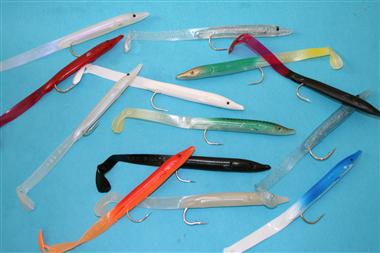
A teaser (also referred to as a “dropper”): For those that don’t know about teasers/droppers. Teasers are considered anything that you tie ahead of your primary presentation. Generally attached via a six inch section of stiff mono to the lower ring of the barrel swivel of your main leader. Teasers/droppers have been around for a VERY long time and are have been used with great success by sharpies and novices alike. Nowadays teasers are generally made from saddle hackle feathers and/or bucktail hair tied onto a strong single hook. They should be attached approximately two feet in front of your main offering. The idea is to present a small natural looking artificial to mimic smaller baitfish. Teasers/droppers will readily take finicky bass that may not hit your main offering. They can be extremely effective and on many occasions will out fish your main offerings. Many sharpies can relate occasions when if you didn’t use a teaser you would go fishless. Another popular teaser is the 4 ½ inch Red Gill Rascal. This soft plastic dropper imitates a small sand eel and has taken more cows than you can imagine. Cost: Feather $2.25 – $3.50
Red Gill $2.75

178mm-red-gill-group-l

So there you have it, three proven killer striped bass lures for less than the cost of a fin. If you were a surfcaster on a limited budget and these three items were all you could use for an entire season… you would still be very successful.


Rivers End Surf Day ..plus…ONE ANGLER’S VISION: PART IV SOUTH VS. NORTH

The winner of is adamsotiryadis@yahoo.com. You have 5 days to get us your shipping address at info@surfcastersjournal.com

I have blog posts from Dennis Zambrotta, Dave Anderson and Crazy Al lined up for you guys, in addition to continuing series from Charles Witek

STRIPER SURF DAY                                   March 22th

River’s End Tackle in Old Saybrook CT

Under the snow there really will be a spring run.  Get ready and celebrate it at Striper Surf Day. It’s a great day to hang out, take in a seminar and tell some lies with fellow surf rats. We’ll have great speakers and an emphasis on how to demonstrations, factory reps, sales, door prizes, gourmet road kill and good friends.


FEATURED  SURFCASTERS  and  DEMOS

Bill  Wetzel – Legendary  Montauk guide is giving a seminar on “Reading the Water”. Bill’s knowledge and delivery will have you leaving for the beach immediately.

Steve McKenna – conducting a seminar “ The Top 10 Surf Lures”

Steve will also be demonstrating how to load Redfins and Northbar Bottle Darters.

Toby Lapinski – will demonstrate how to make the classic rigged eel.

Dennis Zambrotta – will demo how to rig eel bobs as well as show you how to fish with teasers. He’ll also be signing copies of his book “Surfcasting Around the Block”

Surfcaster’s Journal crew will be there  with new Tools of the Trade shirts , free with your renewals or new subscrption

Adam Romagna – is displaying antique striper plugs and can help ID and appraise your old lures.

Shimano –Will demonstrate their new line of surf rods and reels.


We’ll also have reps from CTS Rods,

Van Staal,  Commando Surfcasting,

Super Strike, Zee Baas, Tsunami,

Lunker City, Pure Fishing, Guppy Lures,

Northbar Tackle and more.

It’s free, just show up.

Editor’s note

In a lot of ways, we consider anything Charles Witek has to say on fisheries management and conservation a “must read”. Charlie has recently started a blog at  http://oneanglersvoyage.blogspot.com/

I hope many of you check it out and subscribe to be notified when Charlie posts his thoughts on this very difficult and often confusing subject. But in case you are too lazy to click it we will repost his blog right here. But I do urge you to subscribe to his feed on his blog

Zeno

ONE ANGLER’S VISION: PART IV SOUTH VS. NORTH

I’ve had the good fortune to fish along most of the American coast, from the cod and pollock ledges off New England to the Gulf Stream off Florida, from the reefs of the Keys to the snapper banks of the Gulf of Mexico.  I’ve chased fish of various kinds from southern California up to the Columbia River and to Alaska’s Cook Inlet and Prince William Sound.  I’ve even done some fishing in Hawaii.
No two places I’ve fished are exactly the same.  The fish are different, the water is different, the bottom is different; even anglers’ attitudes and the ways they prefer to fish change as one travels along the coast.
But the really big dividing line is the one that separates warm, subtropical seas from the cooler waters farther north.
Southern seas are filled with a plethora of life.  When I fish for snapper down in the Keys, I’m always amazed at the variety of fish that I see over the course of a day.  My first fish might be a yellowtail; on the next drift, a cero mackerel hits the bait on its way to the bottom.  There will be mutton snapper and margates, gray snapper and grunts, and in the midst of it all maybe a bright blue parrotfish or a spotted, snapping, sinuous moray eel.
My friend Mike Mucha describes a trip on a Keys headboat as “going out for aquarium fish” because of the variety and varied appearance of everything that comes on board.
And that’s not unexpected, because southern waters are known for high biodiversity.  They hold a lot of different kinds of fish.
But what a lot of folks—anglers and non-anglers alike—don’t realize is that despite such high biodiversity, southern waters support a relatively low biomass.  When you take all of the fish and combine them together, there aren’t nearly as many fish as there are up north.
That’s because southern waters are pretty infertile; they can’t support too much life.  The crystal clear water that lets you see a hooked fish flashing when it’s still sixty feet down holds very little plankton, the tiny plants and animals that form the foundation of the marine food web.
For abundance, you need to go much farther north, to the soupy green seas off New England, where a rich broth of single-celled plants and the animals that feed on them can nourish a truly huge, if less complex, web of life.
It is no mystery why whales feed in high latitudes, for that is where the food is.
Bait can seem abundant in southern waters; there are halfbeaks and saury and flying fish, and at the right time of year, big schools of mullet migrate along the coast.  But there is nothing in those southern seas that can equal the huge shoals of herring and mackerel that the northern ocean can readily support; nothing ever recorded in the south could equal the immense abundance of the cod, haddock and other groundfish that swam off New England, fish abundant enough to feed much of the Western world for more than four hundred years.  And even those once-abundant stocks would probably take a back seat to the hordes of pollock that swim off Alaska.
Northern waters don’t hold many different kinds of fish—the biodiversity is fairly low—but it can support a huge abundance of them.  Biomass was once amazingly high.
Down south, there isn’t a lot of any one species (although if you hit the yellowtail right, and see the huge mass of fish that changes the very color of the water as it rises up in response to your chum, you might have trouble believing that’s true).  Thus, it is very easy to overfish.
In the north, there aren’t many species, and the very vastness of the stocks made it impossible for anglers—and early fisheries scientists—to believe that they could be harmed by the hand of man.  But that abundance concealed more complex stock structures than anyone suspected, and the very abundance might, in itself, have created a vulnerability—perhaps similar to that of the extinct passenger pigeon—in which high numbers are needed for successful reproduction.  Whatever the cause, we discovered that northern stocks could be overfished, too.
Federal fisheries law, in the form of the Magnuson-Stevens Fishery Conservation and Management Act, must prevent overfishing, and rebuild overfished stocks, in all of America’s waters.
Thus, one would expect the Theodore Roosevelt Conservation Partnership’s report “A Vision for Managing America’s Saltwater Recreational Fisheries” (http://www.trcp.org/assets/pdf/Visioning-Report-fnl-web.pdf), which proposes changes to that law, to be as relevant to fisheries off Oregon, Maine and Alaska as it is to fisheries off Alabama or Texas.
Unfortunately, that isn’t the case.
The “Vision” report is very much a response to southern fisheries issues, that gives little consideration to anglers on the West Coast or those who fish north of the Georgia-Florida line (OK, maybe if I was being charitable, north of the Pee Dee River, which divides the Carolinas).
The first, largely superficial hint of that comes from the graphics that accompany the document.  Out of the twenty or so photos that grace the inside, you don’t see a single fish or a single photo that doesn’t represent the Gulf of Mexico.  There are snook, but no striped bass or salmon.  Snappers and red drum, but no cod, fluke or halibut.  Mullet, but no menhaden or mackerel.
As you begin to read the text of the document, you also see the same kind of disconnect with anglers who fish far from the five Gulf states.  You see an indictment of the federal fisheries management system, but no acknowledgement of its successes in the Mid-Atlantic, where every species under federal management is either fully recovered or well on the way back, and none are overfished or subject to overfishing.
The “Vision” report, in its effort to promote state, rather than federal, management of important recreational species notes that
“Many state natural resource agencies,especially those in the South, recognize the benefits of a vibrant recreational fishing community and have managed to promote it while conserving their saltwater resources. Striped bass, red drum, black drum, summer flounder, sheepshead, snook, spotted seatrout and tarpon are examples of successfully managed state fisheries that sufficiently meet the needs of recreational anglers while providing extensive economic benefits to their state and the national economies.
“Many coastal states have adopted management models that are well tuned for their particular saltwater fisheries. These models conserve fishery resources, provide multi-year consistency in regulations and allow for ample public access.  However, these approaches have not yet been embraced by the NMFS, which is a significant contributing factor to the current dilemma in saltwater recreational fisheries management.”  [emphasis added]
Even if we ignore the fact that part of that statement is blatantly wrong—summer flounder were the species which set the legal standards for federal fisheries management, and a significant majority of striped bass fishermen would take issue with the stock being “successfully managed,” given that it poised to descend into “overfished” territory within the next year or so—the words “especially those in the South” should be creating a very big red flag for any angler who fishes Mid-Atlantic, New England or Pacific shores.
Because when it comes to problems facing anglers there, the “Vision” report just doesn’t get it.
While the “Vision” report rhapsodizes over “state natural resource agencies, especially in the South” who supposedly “sufficiently meet the needs of recreational anglers,” it ignores the multiple failures of what is undoubtedly the biggest coordinated state fishery management effort—the Atlantic States Marine Fisheries Commission—which in the past 20 years has managed to restore only one stock, striped bass, to health (and is now dithering and delaying taking necessary action called for in the recent benchmark stock assessment, as the striped bass stock comes ever closer to returning to “overfished” status—while over the same period overseeing the decline, and in some cases the collapse, of stocks that include weakfish, Gulf of Maine winter flounder, tautog, American eel, American shad, southern New England/Mid-Atlantic winter flounder, northern shrimp, alewives, southern New England lobster and blueback herring, among others.
Because when you don’t raise your eyes above the Florida border, you’re not going to notice such things.
Nor are you likely to notice that up in New England, and even in the Mid-Atlantic, “state natural resource agencies” are pretty close to the commercial fishing sector, as well as the party and charter boat industry, which generally wants the same sort of risk-prone management that the net boats support.  Up here, we’ve already seen what “flexible” management—avoiding hard quotas and using weak proxies such as daily trip limits and limiting days at sea—has done to the cod stocks (there aren’t many left), winter flounder (there are almost none left) and minor groundfish such as whiting (there are quite a few left, but you can’t catch them from piers any more; you need to run 75 miles offshore).  We don’t need more “flexibility”; we need more hard quotas, before the little we have left is gone.
It might already be too late for winter flounder and local populations of cod.  But if your sole focus is on southern reefs, what happens up here is completely blurred.  You neither notice nor care.
And it’s not only here.  The West Coast isn’t in focus, either, so you probably don’t see anything wrong with giving even greater authority to those “state natural resource managers” in California who have already closed anglers out of once-prime fishing grounds.
When you manage northern—or at least cold-water—fish, you can’t afford to let a stock collapse.  Down south, if you lose a single species, you have scores of others to take up the slack.  Up north, that single species may be the only thing anglers can fish for.  Here on Long Island, we used to start fishing sometime in March; with the winter flounder all but gone, fishing is barely worthwhile until May.  There used to be a winter cod fishery; the fish didn’t show up this year, and I’ve been on shore since before Thanksgiving.  If anything happened to the fluke, our bays would be nearly empty throughout the summer.
So when you manage our northern fish, you need to manage for abundance.  Conservation matters, because if one species goes missing, you may be left with nothing at all.  When stocks are restored to abundance, seasons are long, but there aren’t many things that we fish for.
In the south, biodiversity is so great that you can catch a little of everything.  But emphasis must be placed on “a little,” because, by northern standards, nothing is really abundant.  You can’t afford to kill a lot of any one thing.  And because no species is truly abundant, bycatch becomes a far more significant issue.  One of the books that I keep near at hand when writing about fisheries issues is Fisheries Ecology and Management by Carl Walters and Steven Martell.  It is a standard and well-respected text, and its authors note the need to be aware of bycatch down south, saying that
“in multispecies situations such as the reef fisheries off the coast of Florida…the bionomic equilibrium with respect to the targeted fish species may be at efforts high enough to drive some ‘incidental’ or nontarget species toward biological extinction.”
I think we can all agree that extinction is bad, yet if we don’t manage all fish in a multispecies complex, such as the reef fish complexes managed by the South Atlantic and Gulf of Mexico fishery management councils, extinction might can happen just because folks want to catch a particular species—such as red snapper—so badly that they don’t take enough time to consider what harm they’re doing to something else.
In such situations, managers need to keep the seasons short to minimize bycatch of the least abundant species while maximizing, to the extent practical, harvest of those that are most abundant.  The ideal example may come from waterfowl management; we are given a 60-day season, during which we are allowed a total of 6 ducks, but can take only one black duck, one pintail, etc.  Similarly, a short reef-fish season may provide a relatively liberal overall bag, but just one or two red snapper or other still-rebuilding species.  Because of the south’s high biodiversity, anglers can easily switch off to mackerel, dolphin, wahoo or inshore species when the reef fish season is closed.
That probably won’t be too palatable to some of the folks down south, who seem to spend all of their time obsessing about red snapper, and figuring out ways to kill a few more.
And, unfortunately, that’s relevant to TRCP’s “Vision”.
Like many groundfish, red snapper have been hit hard over the years by both recreational and commercial anglers.  Stocks were overfished, and managers were compelled to adopt strict rebuilding measures.  The fish responded.
Anglers are seeing more fish, are catching more fish, and are killing more and larger fish, but the red snapper stock is far from rebuilt.  Anglers don’t understand what it will take to fully recover the stock, and they don’t understand why, if the population is growing, they can’t take more snapper home.
So organizations which represent anglers and the fishing industry have spent the past few years trying to find ways to kill more fish.
They found a few friendly scientists who were willing to argue that there were more snapper around than the managers believed; most scientists disagreed, so that didn’t work.
They found a few friendly Congressmen who drafted the Fishery Conservation Transition Act and, later, the Fisheries Science Improvement Act, both of which would delay stock rebuilding, and allow a bigger kill, while more research was done.  Neither bill passed, so that didn’t work.
They found a few more friendly Congressmen who drafted the Gulf of Mexico Red Snapper Conservation Act, which would render federal fisheries law irrelevant by handing red snapper management to the states.  That bill is still alive, but unlikely to pass, so that probably won’t work, either.
But the reauthorization of the Magnuson Act offers another possibility.  The same folks who supported the Gulf of Mexico Red Snapper Conservation Act and other failed attempts to evade the conservation provisions of federal fisheries law (http://www.coastalconservation.us/images/db_newsfiles/45.pdf) are for the most part the same folks who “contributed” to TRCP’s “Vision” report.  And so the same themes—delayed rebuilding, turning management over to the states—that showed up in the failed legislation is now showing up as their “Vision” for the Magnuson reauthorization.
They would make the Magnuson-Stevens Fisheries Conservation and Management Act the “Frustrating Conservation and Rebuilding So We Can Kill More Act.”  They’re going to get a bigger red snapper harvest if it’s the very last thing that they do.  And if they have to trash the fisheries up north and in the Pacific to do it, they don’t really care.
There’s a saying in presidential politics, “As Ohio goes, so goes the nation,” which suggests that Ohio is so typical of America that whoever receives the majority of votes there will prevail nationwide.  The TRCP’s “Vision” report seems to be suggesting a similar paradigm of “As Texas (or Florida, or Louisiana) goes, so goes the nation’s fisheries.”
But the federal fisheries in those southern states are very different from the fisheries that prevail off Maine, Alaska, California or New York.  And answers that work—and perhaps more relevant to this discussion, answers that don’t work—for red snapper off Alabama or Mississippi shouldn’t be forced on cod off Maine, summer flounder off Virginia or rockfish off the Oregon coast.
We don’t have red snapper on Long Island.  They’re pretty scarce of New Hampshire, New Jersey and Washington, too.
When it comes to the Magnuson Act, we need a “vision” that serves not just the Gulf Coast, but every coast.
We need a “vision” less myopic than the one presented by TRCP.

Gettin Schooled by Bill Wetzel

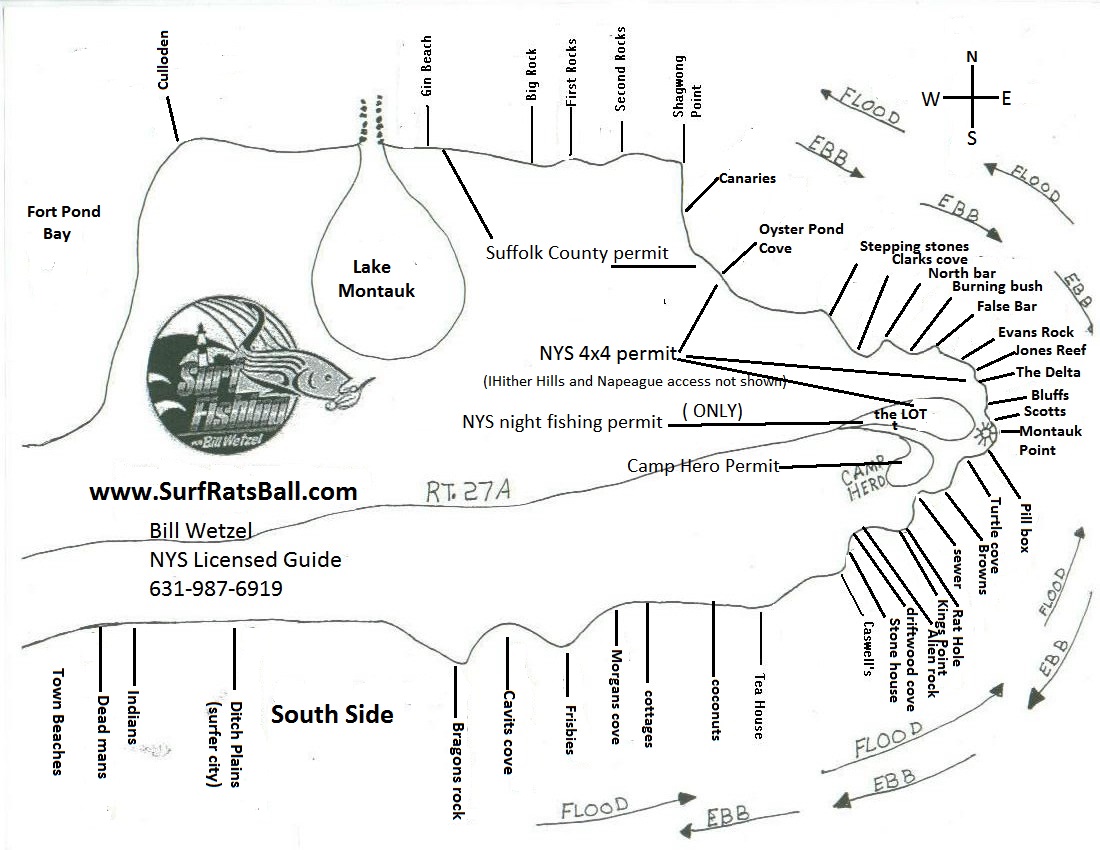
I believe it was the second week of December in 1991. The SW winds were blowing at a sustained fifty knots bringing the warm air from the south, and raising the night air to temperatures near sixty degrees. High tide was around 9pm and we had just came off a moon. New or full I do not recall. Montauks south side put the wind directly in your face making the Atlantic Ocean churned up and huge. The plan was to hit the stepping stones on the north side and work my way over to false and north bar on the dropping tide.

I was about twenty six years old and armed with a Saber 11 ½ foot fiber glass rod, and a Penn 850SS reel, spooled up with 20lb Ande pink. Most guys at that time had similar set ups. I arrived at the light at about 9pm and crawled my 1988 sky blue Nissan Pathfinder into the north side entrance.  Through the woods, and out at the false bar cut I kept heading west to get to the Stones.  I arrived to the rock piles and stepped out of my buggy, I remember thinking “this is not bad”. The water was flat and clean as the warm fierce SW winds blew over the bluffs and into my back. I crawled out onto some of my favorite rocks and began casting black with gold tint Long A Bombers.

After about 11:30pm I took a drive to False and North bars. With the place completely disserted, I continued casting the bomber and would occasionally mix it up with the classic Gibbs yellow darter. Back then I do not think there was a Montauk caster alive that did not carry a Gibbs yellow darter. By 1am I had not a touch and took the drive around Clark’s cove, though the stepping stones, around the Oyster pond and into Shagwong. With my headlights off I noticed about ten casters lined up and one of them dragging a slob towards my buggy. My mind went completely numb. “Ya got a scale?” the caster asked. I pulled out the old brass Manley and confirmed the weight to be 44lbs.  “They got the herring pushed up to the beach, nothing under the 30lbs. Just throw a Super Strike yellow darter. That’s all they want”. I quickly grabbed my rod and stuck with my bomber. I knew I could cast it a mile with the wind at my back and I remember thinking “I’ll show these guys what a bomber can do”. I was young, cocky, and too green to listen to words of wisdom. I worked my way into the outside edge of the lineup and watched every guy hooking into huge fish, most of them well over 40 lbs with some schoolie 30’s mixed in. I could not even get a tap with my bomber, and after about 20 minutes of watching guys bail cows I tied on a Gibbs yellow darter. In 1991 Don Musso had introduced his plastic Super Strike darter and every caster in the lineup was using one. On the other hand I only had my trusty Gibbs.  I threw the Gibbs with passion and panic, but could not buy as much as a bump. My entire body was shaking and casters continued to pound slob after slob. I heard the whistle of the darter that night and today I can tell you that no other plug that I know of makes the whistling noise like Don’s plastic darter.  “It must be the darter. It’s not swimming right”, I thought. I put on another Gibbs darter but it only yielded the same results. By 3am there was barely any tide left and the lineup left one by one. Every caster had his share of multiple forties and maybe even a fifty or two. On the other hand I kept fishing until the tide slacked out. I did not manage so much as a bump. Although the Gibbs and the Super Strike darter are very similar in profile and action, the Super Strike has a slightly deeper dig and perhaps a little more zig and zag.

I was a young man without much money but I had been saving up $100 to buy a batch of plugs. The next day I took the money, walked into my local Bait and Tackle shop and asked “how many Super Strike darters can I buy for $100”.

montauk map type3 (2)

Bill Wetzel is what we like to call “The Hardest Working Guide in the Surf”. A quintessential Montauk Regular Bill works hard at teaching his clients the secrets of Montauk coves and consistently puts them on the fish. No wonder most of his customers come back for more year after year. Bill also runs a Surf Rats ball, Subscribers only forum at http://www.surfratsball.com/ There he exchanges ideas with his subscribers and of course, logs each and every one of his trips for all to read. Check it out at http://www.surfratsball.com/

surfratsball_logo3_30-300x90

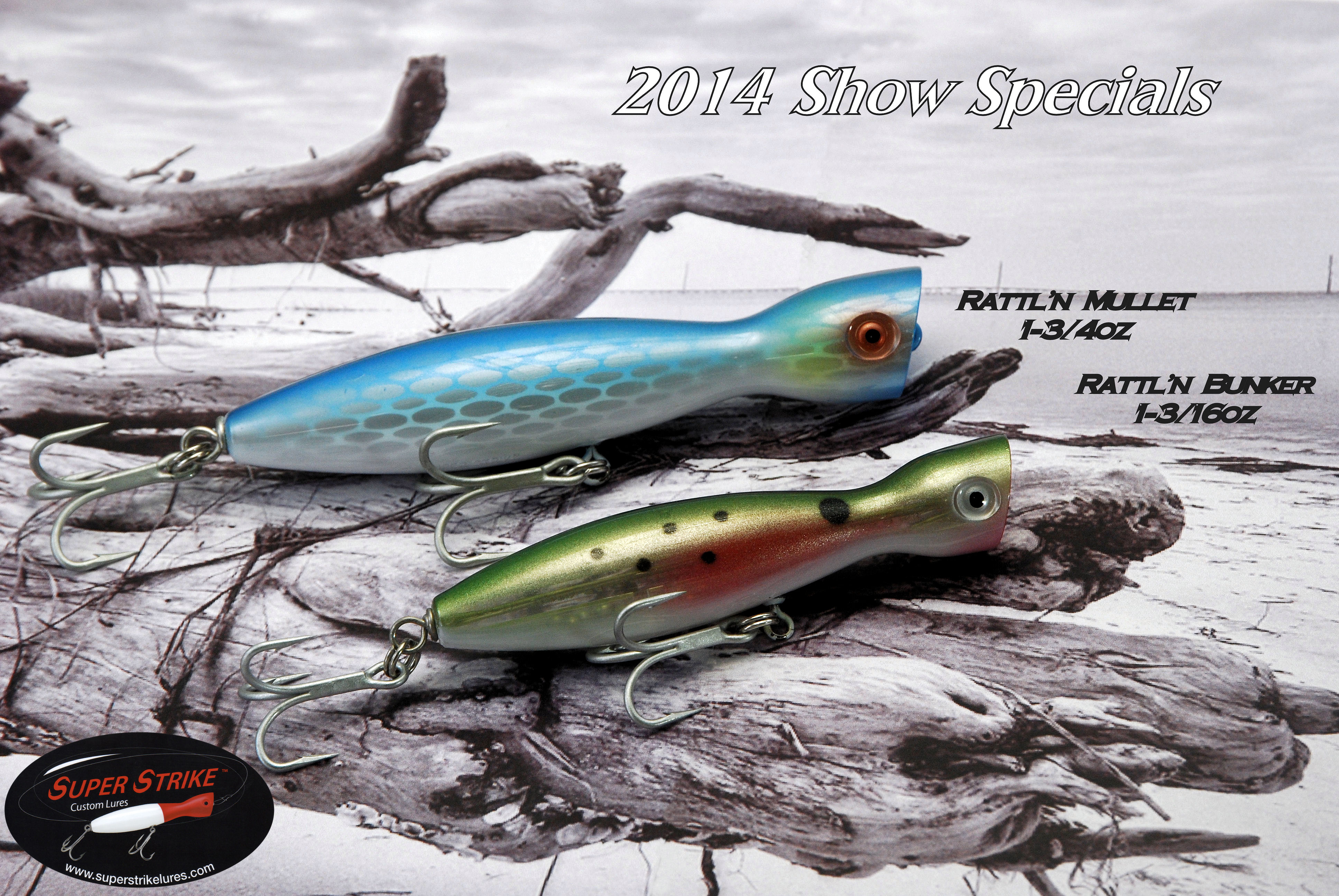
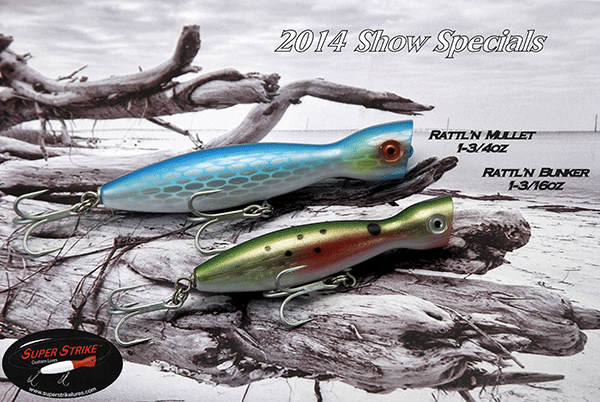
Win a pair of Super Strike Show Special Poppers, Rattl’n Bunker and a Rattl’n Mullet

We are a little out of “sync” with not being home on weekends but we got some nice stuff lined up for you. A new blog post from Dennis Zambrotta, more good stuff from Charlie Witek, a Q&A session with Crazy Alberto Knie ..and more giveaways of course.

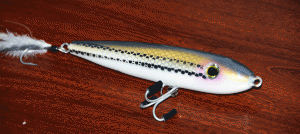
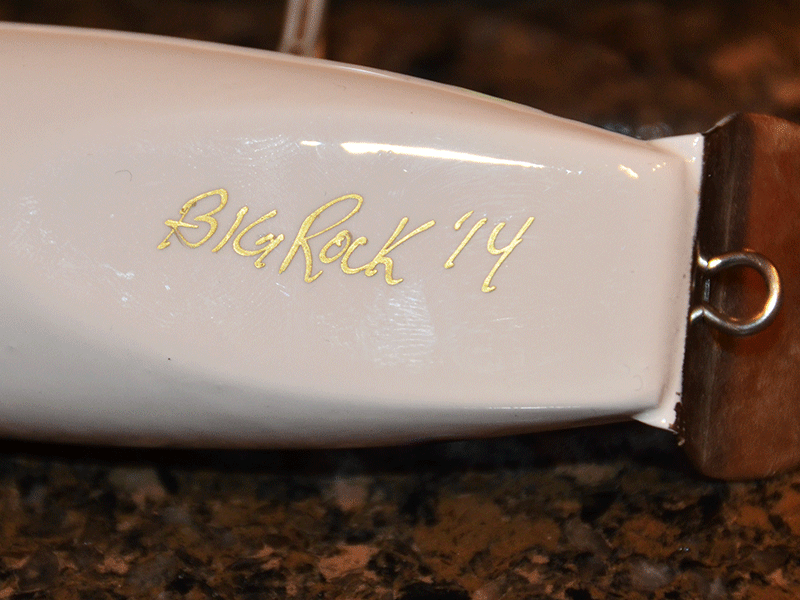
Lets get to it. Winners of the Big Rock swimmers giveaway, (each winner will receive one Big Rock Custom swimmers) are  CPollnow7@gmail.com and  mpac422076@aol.com . You both have 5 days to contact us with your shipping address at info@surfcastersjournal.com

DSC_3440

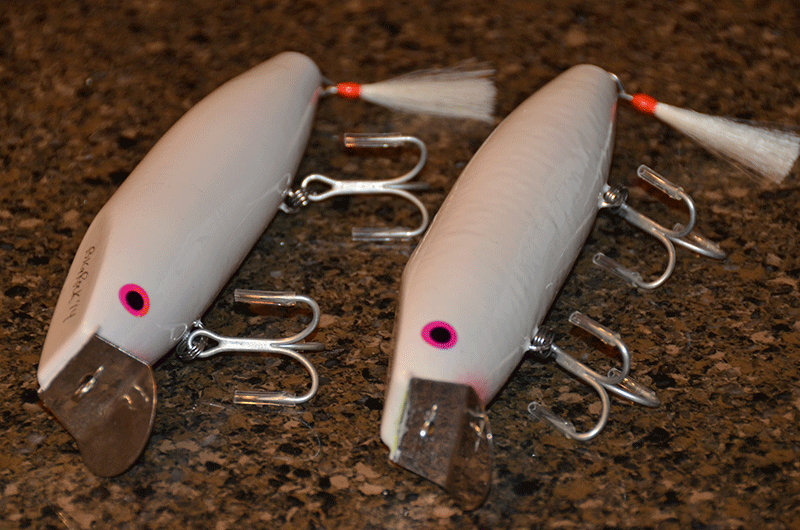
And for this week giveaway, we are tickled pink to be able to feature these Super Strike Show Special Poppers.

One winner will walk always with a Rattl’n Bunker and a Ratlt’n Mullet Super Strike Show Special poppers, courtesy of  Steve Musso at Super Strike Lures http://superstrikelures.com/

If you are not a fan on FB , you should be as they feature news and giveaways all the time. You can find them at https://www.facebook.com/SuperStrikeLures

Thank you Mr.Musso for your kindness, support trough the years and for making the best darn plugs on the planet.

In order to be eligible to win you must enter “I want these Super Strike Poppers”

2014 Show Specials

ONE ANGLER’S VISION: PART III GAMEFISH AND GROUNDFISH

Editor’s note

In a lot of ways, we consider anything Charles Witek has to say on fisheries management and conservation a “must read”. Charlie has recently started a blog at http://oneanglersvoyage.blogspot.com/

I hope many of you check it out and subscribe to be notified when Charlie posts his thoughts on this very difficult and often confusing subject. But in case you are too lazy to click it we will repost his blog right here. But I do urge you to subscribe to his feed on his blog

Zeno

ONE ANGLER’S VISION: PART III GAMEFISH AND GROUNDFISH

When the Theodore Roosevelt Conservation Partnership noted, in their report “A Vision for Managing America’s Saltwater Recreational Fisheries” (http://www.trcp.org/assets/pdf/Visioning-Report-fnl-web.pdf), that recreational fishermen “are more focused on abundance and size, structure of the fisheries, and opportunities to get out on the water” than in piling up dead fish on the dock, they acknowledged a basic truth.  But it is a truth that must be taken in context.
There are fish such as bonefish and tarpon that are valued solely for sport and not for their meat, and are killed only rarely.
There are fish such as permit that are might be fine eating, but are so valued as gamefish that killing one is something that, as a rule, “is just not done.”
And then there are panfish.  The species differ from place to place, but most of them are what they call “groundfish” up in New England—fish species that, when the stock is healthy, swarm in abundance on or near the ocean bottom.  They are the bread-and-butter of the party boat fleet, and a lot of the charter boats, too.  And while anglers may release most of the gamefish they encounter, when they go out after groundfish, they’re planning to bring something home.
Haddock fishermen just aren’t big on catch and release.
That has implications for management that the “Vision” report chose to ignore.
The report says that
“The NMFS should manage recreational fisheries based on long-term harvest rates, not strictly on poundage-based quotas.  This strategy has been successfully used by fishery managers in the Atlantic striped bass fishery, which is the most sought-after recreational fishery in the nation.  By managing the recreational sector based on harvest rate as opposed to a poundage-based quota, managers have been able to provide predictability in regulations while also sustaining a healthy population…”
It’s a nice statement, but the essential premise is wrong.  The most recent “benchmark” assessment of the striped bass stock (http://nefsc.noaa.gov/publications/crd/crd1316/partb.pdf)—a peer reviewed study that is as close to a “gold standard” as you can get in fisheries management—shows that the population is not healthy.  It has been subject to overfishing half a dozen times in the past ten years, has been steadily declining in abundance and is likely to be declared “overfished” in the next year or two.  (The only reason that the Atlantic States Marine Fisheries Commission can still claim that the stock is healthy today is because ASMFC has not yet incorporated the conclusions of the new stock assessment into its management plan; although it received the benchmark assessment last autumn, it is still using obsolete and since-discredited criteria to gauge the health of the stock, rather than the newest and best available science.  That, in itself, is an indictment of striped bass management.)
Anyone with even a casual familiarity with the striped bass fishery knows that managers deserve little credit for maintaining the fishery, whether through “predictability in regulations” or otherwise; instead, all credit should go to the striped bass anglers themselves, who choose to kill far fewer fish than the managers allow.  In fact, bass anglers have been begging fisheries managers to reduce striped bass harvest for years.  They have been repeatedly rebuffed.  Despite steadily decreasing abundance, managers have so far clung to a target fishing mortality rate (F=0.30) that is not only far higher than that recommended in the benchmark assessment (F=0.180), but is also well above the overfishing threshold (F=0.213).
How that sort of management can be considered a good thing, and preferable to kind of sustainable management that restored species such as fluke, scup and black sea bass, is beyond my understanding.  Because if striped bass managers don’t get their act together soon, bass could well become another great fishery that we speak of largely in the past tense.
The only thing that’s keeping that fishery off the ropes today are the serious striped bass anglers who respect the bass as a gamefish, and release far more than they kill.  If they all treated like a groundfish, the story would not be the same.
How can we know that is true?  Consider the winter flounder.
Winter flounder are arguably the definitive groundfish of the northeast coast.  When the stocks were healthy, flounder were everywhere.  Taking home a bushel basket or a burlap sack filled with fish was not unusual during the height of the season (and the fish averaged less than a pound).  They seemed to line the bottom.  In my home waters off western Connecticut and the South Shore of Long Island, flounder once provided a year-round fishery that only shut down when the bays were locked in ice.
The Atlantic States Marine Fisheries Commission never set a hard quota for flounder.  It merely established a harvest rate, which could be exceeded with impunity.  In time, flounder were overfished, and the inshore stocks collapsed.  They have fallen so far that the southern New England/Mid-Atlantic stock can muster just 9% of its spawning potential.  Even so, early last month ASMFC inexplicably decided to allow recreational fishing pressure to increase significantly, extending the season from two months to ten (see my earlier post athttp://oneanglersvoyage.blogspot.com/2014/02/winter-flounder-last-tuesdays-travesty.html for the whole sad story).
As I write this post, New Jersey is thinking about lengthening its winter flounder season to the full ten months allowed by ASMFC.  The collapse of the stock and low local abundance is not a part of the debate.  Instead, as Tom Fote, New Jersey’s governor’s appointee to ASMFC notes
“I don’t see any reason why they wouldn’t support opening up the whole the season mainly because there is no quota to go over” (http://www.app.com/article/20140303/NJSPORTS06/303030096/Winter-flounder-decision-due-Thursday?nclick_check=1)
In too many anglers’ minds, groundfish exist to be eaten.
Without a quota, such anglers will show no restraint.
That fact needs to be remembered when setting management measures.  Groundfish are good food, so many species support big commercial fisheries, attract a lot of anglers and are the darlings of the party boat fleet.
Some people fly thousands of miles in search of tarpon and bonefish, knowing that they’ll end up releasing them all.
Others spend countless hours in the wet, the cold and the dark, trying to catch striped bass.  When they finally land one, they often let it go.
But when people take a ride out on the bay on a summer afternoon, and try to catch some fluke, they’re planning to bring home meat.  Folks can talk all they want about the joys of spending time with friends on the water, but a fluke fisherman with an empty cooler is an unhappy soul.
And that’s why groundfish, rather than gamefish, seem to always be at the center of the hottest fisheries debates.  Florida maintains a 1-fish limit on redfish, and a narrow “slot” size limit, and is praised for its prudent management.  Its snook rules are even tougher, but not many anglers complain, because when you’re chasing gamefish, that’s often how it goes.
After a severe cold snap killed many snook down in Florida, Coastal Conservation Association Florida argued that the fishery on the west coast of the state should remain closed, even though biologists believed that it could be safely opened.  CCA Florida noted that
“snook was already predominantly a catch and release fishery before the big freeze kill…recreational anglers release more than 90% of the snook they catch, and since 2005 release more than 95%.”  (http://www.ccaflorida.org/index.php?start=57)
In other words, snook are a gamefish, and anglers can enjoy them without having to kill them.
But in a sort of Jekyll and Hyde transformation, that same CCA Florida took a very different position when it came to managing grouper, one of the iconic southern groundfish.  After the best available data indicated that the recreational fishery should be closed for just a few months to best protect the resource, CCA Florida attacked NMFS decision to do so, noting that
“Red grouper is almost exclusively a Florida fishery and the Florida commission has been consistently rejected.  What needs to be done is our congressional delegation needs to change the federal law so in situations like this, where you have a state that has a huge interest in a fishery, they need to have a greater role.”  (http://articles.sun-sentinel.com/2005-11-20/sports/0511190580_1_red-grouper-cca-florida-gag-grouper)
In other words, if the federal law requires fisheries managers to employ the best available science and protect the grouper from overfishing, then federal law needs to be changed.
Because grouper aren’t gamefish, they’re food.  Different rules apply.
If you think otherwise, just contrast the cries of anglers who demand to kill more red snapper (http://www.joincca.org/articles/143) (or fluke, or black sea bass or…) with the equally passionate cries of anglers who demand that fewer striped bass be allowed to die.  Listen for just a little while, and you’ll have no more questions about the gamefish/groundfish divide.
So we come to the effort to replace “poundage-based quotas” with “long-term harvest rates”, which may be less a fight over methodology and more of an effort to continue overharvesting groundfish.
As the theoretical level, the distinction between quotas and harvest rates is really no distinction at all.  Any harvest rate—or, more correctly, any “instantaneous fishing mortality rate”—can be converted into the percentage of fish that can be removed from the population annually.  Multiply that percentage by the estimated size of the stock (in pounds or in metric tons, it doesn’t matter) and you get a “poundage-based quota.”  Reverse the calculation, and you can convert a quota—or, in practice, actual landings—into the fishing mortality rate.
But at the practical level, the distinction is real.
Poundage-based quotas are easy to apply, and can be enforced proactively.  Managers can determine a reasonable fishing mortality rate, convert that into a quota, and then set appropriate seasons, size limits and bag limits to avoid overfishing.
That system isn’t perfect; there is always “management uncertainty” at play.  Angler effort can be greater than expected, weather can affect harvest, or the fish can be more or less “catchable” than expected; as a result, harvest may be significantly higher or lower than predicted.  In addition, because it is impossible to physically count every angler’s landings, such landings must be estimated through the use of a survey.  Under perfect circumstances, such estimates lag harvest times by about six weeks; in reality, overfishing may go undetected for two months or more.
Thus, quotas are often exceeded before managers can prevent it, and some anglers object when the next year’s quota is reduced as a result (“We don’t want to kill fewer fish…”)  On the other hand, high harvest levels early in the season can cause managers to shut down fishing earlier than planned, even though they later discover that the closure hadn’t been needed, and that causes other complaints (“We could have killed more fish…”).
But as a rule, hard quotas provide a lot of management flexibility, often allowing seasons to be closed early to avoid overfishing, and almost always allowing regulations to be adjusted in time to avoid overfishing in the following year.
Managing by harvest rate, as ASMFC manages striped bass, is trickier, in part because the mortality rate is determined retroactively.  Managers have no idea of whether their regulatory approach worked until well after the season is over, when it is already too late to change regulations for the following year.
That’s because managing by harvest rate requires managers to reassess the stock every season, which is an expensive and time-consuming process.  Because of the cost in financial and human resources, it is only practical to manage a handful of species that way (and, for most species, managers lack the data needed to calculate fishing mortality rates accurately).
When a stock is managed by harvest rate, it is impossible for managers to react quickly to changes in the fishery.  The mortality rate for any given year won’t be finally determined until about halfway through the following season (even the preliminary annual harvest estimates needed to begin the task aren’t available until mid-February).  Thus, if the fishing mortality rate in any year was too high, and overfishing occurred, it is likely to occur in the following year as well.  “Predictability in regulations” is not always a good thing…
Managing by harvest rate is a viable strategy for fully-recovered stocks such as striped bass, particularly when a large proportion of the anglers in the fishery practice catch-and-release and so keep the harvest rate well below the fishing mortality target.  In such a circumstance, overfishing in any one year (assuming that the fishing mortality target selected is the right one, which is not currently the case in the striped bass fishery) will have little lasting effect, and any impact that it does have will be quickly lost among the normal fluctuations that occur in the size of any healthy population.
On the other hand, the inherent delay in responding to overfishing events, and the likelihood of consecutive years of overfishing, makes such a strategy inappropriate for stocks that are still rebuilding, particularly those such as southern New England/Mid-Atlantic winter flounder or South Atlantic red snapper, which remain badly overfished.  In such cases, serial overfishing can slow, halt or even reverse the rebuilding process (it should be noted that, while recreational striped bass harvest may be governed by harvest rate today, back in the 1980s the collapsed stock was rebuilt by what amounted to a very strict quota—regulations had to assure that no more than 5% of any year class, beginning with that spawned in 1982, would be harvested in any given year), and more readily adjusted hard quotas become the more appropriate management tool.
In the end, there is no silver bullet, and one size does not fit all.
While management based on harvest rates may work for some stocks of gamefish, everything else needs hard quotas, either because the stocks are still recovering—and maybe even still overfished—or because angler demand is so high that there is some danger of overfishing just about every season.  Consistently high harvest levels militate against the “long-term harvest rate” approach recommended in the TRCP “Vision” report.  For what, precisely, does “long-term” mean, and when must managers finally be compelled to take action?
Would two consecutive years of overfishing require remedial measures?  Three out of five?  Six out of ten?  Or does the TRCP report envision overfishing going on indefinitely, with no mandatory tripwire at all?
That certainly seems to be the way New Jersey is headed with winter flounder.
Because when “there is no quota to go over,” too many fishermen will see no reason to exercise restraint.

Thank you NJ surfcasters and Striper Surf Day at CT March 22nd

My mind is a little blurry and I think I might be growing a mullet….but let me try to remember it all because it all seems like a blur now at midnight as I am writing this. Four consecutive weekends in NJ, first an awesome Surf Day, followed by Berkley and Asbury shows. Then this weekend my son and I were at Somerset where Tommy and Ray joined us today. I just got home but Tom and Ray are there at booth #10, so if you guys need to renew or subscribe, they have your free shirt and some other goodies.

20140314_175417

First of all, I want to thank ALL OF YOU for your kind words via email and particularly at shows. When people say “this issue is the best yet” it just makes our day. We all try incredibly hard to make next one better than previous one and credit for this goes to Dave Anderson who has amazing skills of working with writers, all contributors and of course our creative genius Tom who designs the best darn publication ever dedicated to the surf. And I cant believe how many of you stopped by and told us how much you love our You Tube channel and FB page. And I thought that was only for cool kids

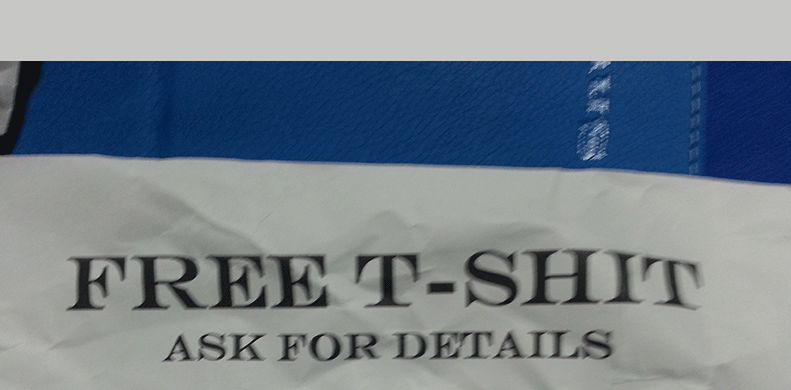
Yes, the shows take a toll on you. I mean, you guys know I have a unique ability to misspell every single word in the English language. But did you know we had Free SH*T at show this weekend? You didn’t? Neither did I until my (obviously) much smarter son pointed out just how low my IQ is by pointing at the sign that was hanging in our booth. And then you guys ask why do I always dumb myself down? There is a reason..haha

can I say I KVIT?

gffhu

Continuing in our never-see-wife-and-kids tradition, SJ crew will be at Surf Day next Saturday, March 22nd at River’s End Tackle in Old Saybrook, CT. They will have new Tools of the Trade t-shirts for you guys attending. If you never been to the Surf Day at Rivers End you owe yourself to stop by and cheek it out. Not only is the shop one of the nicest shops I’ve ever been in but its a surfcasters dream ,carrying everything from soup to nuts to eels. The food is awesome, the crowd is great and friendly, and seminars are off the hook, and this year, the line up is truly fantastic. And its all free

                                 STRIPER SURF DAY  

March 22th, 2014  10-4

Under the snow there really will be a spring run.  Get ready and celebrate it at Striper Surf Day. It’s a great day to hang out, take in a seminar and tell some lies with fellow surf rats. We’ll have great speakers and an emphasis on how to demonstrations, factory reps, sales, door prizes, gourmet road kill and good friends.


           FEATURED  SURFCASTERS  and  DEMOS

Bill  Wetzel – Legendary  Montauk guide is giving a seminar on “Reading the Water”. Bill’s knowledge and delivery will have you leaving for the beach immediately.

Steve McKenna – conducting a seminar “ The Top 10 Surf Lures”

Steve will also be demonstrating how to load Redfins and Northbar Bottle Darters.

Toby Lapinski – will demonstrate how to make the classic rigged eel.

Dennis Zambrotta – will demo how to rig eel bobs as well as show you how to fish with teasers. He’ll also be signing copies of his book “Surfcasting Around the Block”

 Surfcasters Journal Magazine Crew will be there to hang and chat

Adam Romagna – is displaying antique striper plugs and can help ID and appraise your old lures.

Shimano –Will demonstrate their new line of surf rods and reels.

We’ll also have reps from CTS Rods,

Van Staal,  Commando Surfcasting,

Super Strike, Zee Baas, Tsunami,

 Lunker City, Pure Fishing, Guppy Lures,

Northbar Tackle and more.

It’s free, just show up.

 ps

winners of Big Rock plugs coming up when i come to my senses and a new giveaway from Super Strike is on tap too. Here is the preview

dfr

Striped Bass Cooperative Anglers Program ..and Somerset Saltwater Expo

Our readers are always on alert about things that not only concerns them but the fisheries as a whole. Chris Scott is one of those anglers who walked up to us at the recent show and explained to us what NYS  DEC Striped Bass Cooperative Anglers Program is.

“Once you sign up to volunteer you receive a log book and scale envelopes. Anglers log their trips throughout the season and return their book at the end of the year so the data can be entered into the system. The log asks for general information about the trip (i.e. “I fished the south side of Montauk” not “I fished the sewer pipe”,) so there is no need to worry about giving away your fishing secrets. We are more concerned with what anglers are catching and how much effort they put into catching those fish. Anglers are also encouraged to take scale samples from each striped bass they catch before they release the fish. This allows us to age the fish based on the annuli of the scales (like rings on a tree).

The data from both the fishing logs and the scale samples help to build an important recreational data set. Anecdotal data of fisherman observing changes in the fishery become more concrete when there is physical data from multiple anglers collected throughout the season.”

Here is from NY DEC site link http://www.dec.ny.gov/outdoor/7899.html

New York State would like your help.

Here’s a chance for recreational anglers to participate in a fishery research project on its most important level, that of data collection for the DEC Striped Bass Cooperative Anglers Program (SBCA).

New York State is required by the Atlantic States Marine Fisheries Commission, an interstate cooperative fishery management agency, to supplement the Marine Recreational Fisheries Statistics Survey (MRFSS) with additional information from our recreational fishery. We satisfy this requirement with the help of New York State volunteer recreational anglers. We provide volunteer anglers logbooks and small envelopes and they send us information about their fishing trips and scale samples. The scale samples are used to determine the age of the fish and create age-at-length keys. The logbook information helps us determine catch per unit effort (CPUE) or fishing success for New York waters. All this information is used to help determine striped bass populations and help in forming management measures for striped bass along the Atlantic coast. At the end of the year all the fishery data we collect are analyzed and presented in an annual report. The report describes any trends and the quality of striped bass fishing for the year and compares it to previous years. You can look at our most recent report and get an idea of what is done with the samples provided by the volunteer anglers by opening the PDF file in the Important Links column to the right.

Perhaps you would like to participated in the SBCA Program. When you join the program you will receive a logbook, scale envelopes and instructions on how to collect scales and what information to collect. At the end of the year you send us the information which will be entered in our database. Your logbook will be returned to you for you to keep for your own records. We also need information from catch and release fishing; therefore you can participate in this program year round. When collecting scales, please collect them from any size fish you may catch. You do not have to worry about the fish, the scales will grow back.

If you would like to participate in the Striped Bass Cooperative Angler Program, please contact our office at (631) 444-0488 and ask for the SBCA program coordinator. Or you can e-mail us at the Bureau of Marine Resources (fwmarine@gw.dec.state.ny.us).

Electronic Fishing Logbook (eLogbook)

New York State recreational anglers can now report their catch in a voluntary online angler logbook, called eLogbook. Anglers can document their fishing activities, compile their fishing data and plan more effective fishing trips. They will also be contributing needed fishing data to researchers and resource managers by sharing what they catch, the sizes of their catch, and where and when they fish. Recreational angling information can be used by DEC and other coastal resource agencies to assess catch levels, estimate discards, and measure fishing effort. If you wish to use this online logbook, please register and log on online at the Atlantic Coastal Cooperative Statistics Program (ACCSP) web site. Check the DEC ACCSP and Electronic Reporting web page for more information.

Happy fishing!

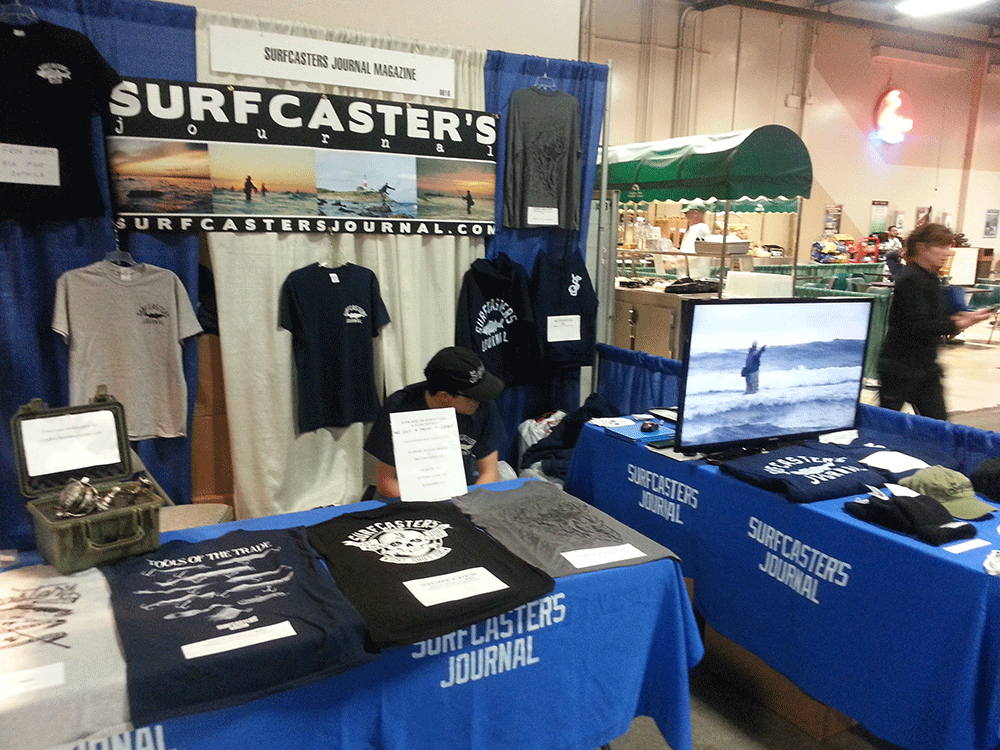
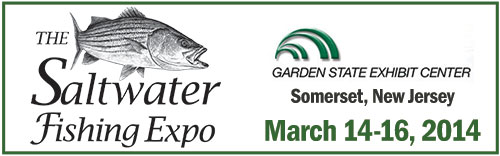
Surfcaster’s Journal Crew will be in booth #10 at the Saltwater Expo in Somerset, NJ all weekend. Stop by, catch some blitz footage on our big screen and pick up any shirt we make for free with subscription or renewal. Plus discounted hoodies and other gear

Have a great weekend

somerset_banner

Win two large Big Rock swimmers

I hope you guys are enjoying the new issue of the Surfcaster’s Journal Online Magazine. I think the whole crew once again outdid themselves and put out another solid issue.

We need to announce the winter of last week  Big Water GRS plug and Black Label Spook. Without further suspense, the random computer program we use spit out a winner and its Mark Catalano

You have 5 days to contact us at info@surfcastersjournal.com

DSC_3434

DSC_3438


Continuing with the thoughts on custom  plugs…

No, I wont go into the all the craziness that surrounds some of these makers, I am totally disinterested in the subject. Its nice to see your hard work appreciated, we feel the same way here at SJ.

Half way trough the last week Asbury Show I attended with my son, Russ “Big Rock” Paoline, Surfcaster’s Journal columnist and maker of wildly popular Big Rock Custom plugs walked up to us and stuffed few lures in our hands. “This is for your readers” he said.

And so it will be

Today’s giveaway is courtesy of Big Rock, two large Big Rock swimmers, two winners. Each will receive one Big Rock lure.

DSC_3441

The skinny?

In order for your entry to count, you must tell us what is your favorite story, feature or picture in the CURRENT issue of the Surfcaster’s Journal Magazine. Everyone that enters with “I am in” will be ineligible to win.

Yeah, this means that the giveaway is only open to subscribers. And yes, there are benefits beyond original articles, original video and free t-shirts.

This one is for you guys, because you are the ones that keep the lights on at SJ

Good Luck

DSC_3440

The new issue of the Surfcaster’s Journal is up for your viewing pleasure

The new issue of the Surfcaster’s Journal is up for your viewing pleasure.

issue24web

Stories from

Crazy Alberto Kine

Bill Jakob

Zach Harvey

Dave Anderson

Frank Pintauro

John Skinner

Big Rock

Rod Guru Lou Caruso

Roger Marin

Al Albano

John Papciak

Chef Chris Blouin

Introducing new column “Ask Alberto” by Crazy Alberto

Bunch of new videos

More than 188 pages of surf fishing heaven sprinkled with some magic dust by our own resident genius, Art Director Tommy Corrigan.

Enjoy

One little change to announce. You can now download the issue for offline reading on your laptop, PC or Mac. I am pretty confident that by Next issue you will be able to download it to your tablet and phone and also pinch/zoom on your tablets. We were hopping for this issue but these shows are leaving us no time to breathe. We will be at Somerset Saltwater Expo this weekend at booth #10 and at RISAA in Providence in few weeks. Stop by and pick up any shirt, free with your renewal or new subscription.

And last and not least, many of you have an expired SJ subscription for variety of reasons, maybe your card was expired or you subscribed at the shows but did not do it this year. When you log into your account click on “Main Page” tab and if it says  “You have no active subscription”  you need to renew to read the new issue

C’mon spring…..sick of this weather